How to Integrate Odoo ERP with Marketing Automation Tools
Businesses that want to improve lead handling, campaign automation, and customer experience often turn to AI and GPT integration services to make their systems smarter. When those capabilities are connected with Odoo, marketing and operations teams can work from a single flow of data instead of juggling disconnected tools.
Marketing teams often struggle when customer data lives in separate platforms. Leads come in from ads, forms, and landing pages, but sales, follow-up, and reporting happen somewhere else. That creates delays, duplicate records, and missed opportunities.
This is where Odoo becomes especially useful. When Odoo is connected with marketing automation platforms, businesses can unify lead capture, campaign execution, sales handoff, and customer tracking in one flow. The result is better visibility, faster response times, and less manual work for growing teams.
Why Odoo integration matters
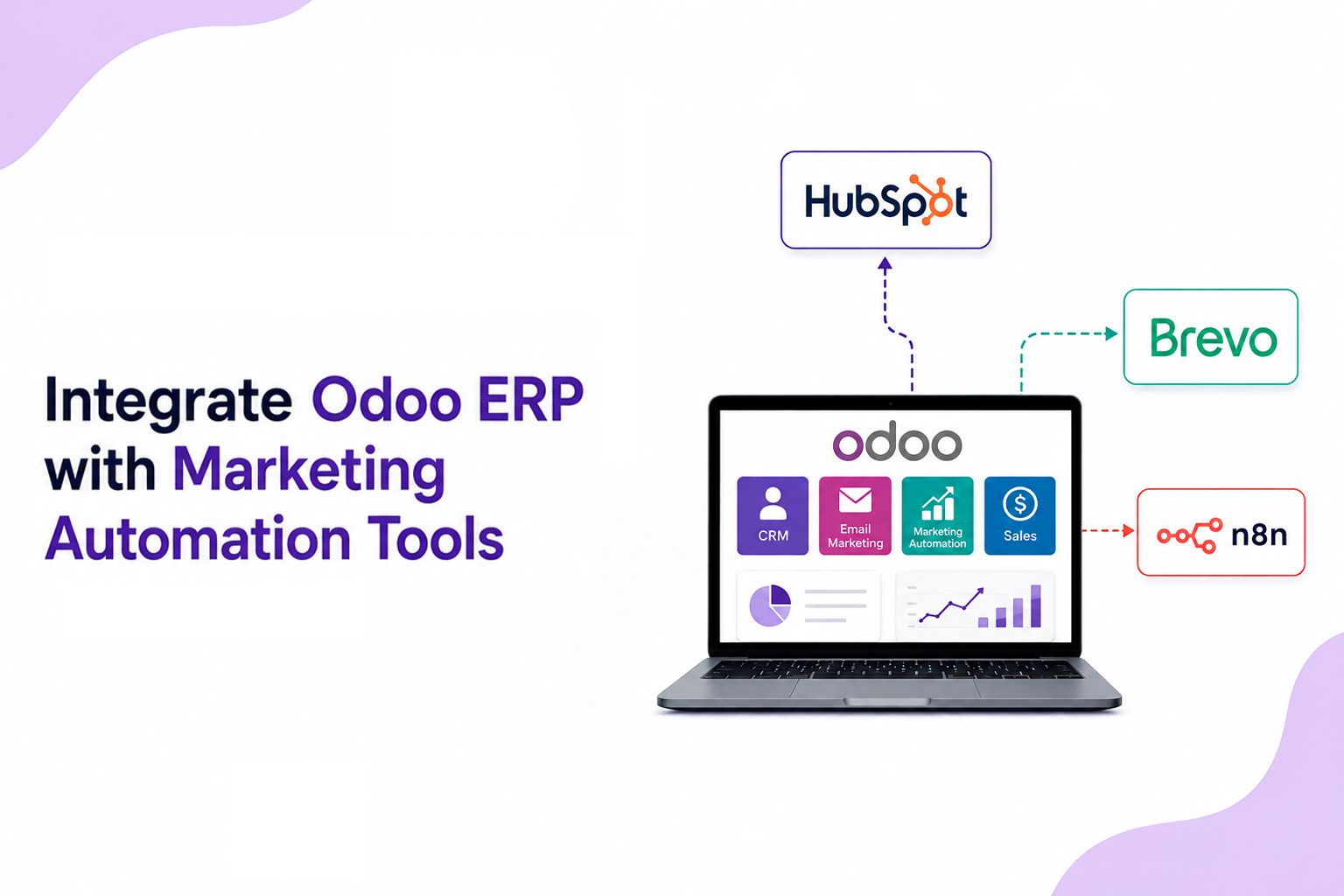
Odoo is more than an ERP. It includes CRM, email marketing, marketing automation, sales, and operations modules that can work together as a connected business system. When integrated properly with external marketing platforms, it becomes a central source of truth for leads and customer activity.
For small and mid-sized businesses, this matters because fragmented systems slow growth. Marketing may generate interest, but if leads are not synced to sales quickly, conversion rates drop. Likewise, if campaign data is not aligned with CRM records, teams lose visibility into which channels are actually producing revenue.
A good integration setup helps businesses:
- Capture leads automatically.
- Route them to the right team.
- Segment contacts for better targeting.
- Track campaign performance more accurately.
- Reduce duplicate data entry.
- Improve marketing and sales alignment.
What Marketing Platforms Can Odoo Integrate With?
Odoo can integrate with several widely used platforms, either natively, through automation tools, or through custom API work.
1) HubSpot
HubSpot is one of the most common platforms businesses use for inbound marketing, CRM, and lead nurturing. Integrating HubSpot with Odoo helps sync contacts, lead stages, and campaign activity between marketing and operations teams. This is useful when one team manages lead generation in HubSpot while another manages sales or fulfillment in Odoo.
2) Mailchimp
Mailchimp is often used for email campaigns, newsletters, and segmentation. When connected with Odoo, businesses can sync customer lists, audience tags, and campaign responses. This helps marketing teams create more relevant email journeys based on CRM or order data stored in Odoo.
3) Brevo
Brevo is useful for email marketing, transactional messaging, and automation. Odoo integration can help businesses keep subscriber data updated and trigger campaigns based on customer behavior. This is especially helpful for ecommerce and service businesses that need lifecycle-based communication.
4) Zapier
Zapier is a simple way to connect Odoo with many other tools without custom code. It can automate tasks like sending a new lead from a form into Odoo, creating follow-up tasks, or updating campaign records. Zapier is often the fastest option for businesses that want quick automation with minimal technical complexity.
5) n8n
n8n is a flexible automation and workflow platform that works well for more technical teams. It gives businesses greater control over logic, data routing, and API interactions. For companies that want low-code flexibility but more customization than standard connectors, n8n is a strong option.
Business use cases
A good integration is not just about connecting tools. It should support real business workflows.
1) Automatic lead synchronization
When a lead fills out a form, registers for a webinar, or downloads a resource, the data can be pushed directly into Odoo. That means sales teams can act immediately instead of waiting for manual transfers.
2) Email campaign segmentation
Odoo data can be used to segment contacts based on industry, purchase history, lifecycle stage, or engagement level. This makes campaigns more relevant and improves open and conversion rates.
3) Customer lifecycle automation
A business can automate different messages depending on where the customer is in the journey. For example, one campaign can welcome new leads, another can nurture prospects, and another can re-engage inactive customers.
4) Lead scoring
If marketing platforms and Odoo are connected, businesses can assign scores based on behavior such as email opens, form submissions, page visits, or demo requests. That helps sales teams prioritize the hottest opportunities.
Integration Methods
There is no single best method for every business. The right approach depends on budget, complexity, and internal technical capability.
1) Native connectors
Some integrations are available through built-in Odoo apps or platform-specific plugins. These are usually the easiest to set up and maintain. They are a good fit when the workflow is straightforward and the business wants faster deployment.
2) REST APIs
API-based integration is the best choice when businesses need full control over data flow, business logic, and customization. This approach works well for companies with unique processes or more advanced data synchronization needs.
3) Middleware platforms
Tools like Zapier, Make, or n8n sit between systems and handle the workflow logic. These are ideal when you want to move data between apps quickly without building everything from scratch. They also make it easier to expand automation later.
4) Custom integrations
Custom integration is the most flexible option. It is useful when the business needs a very specific workflow, a high level of security, or support for complex data structures. This is often the best route for businesses that want long-term scalability.
Best Practices for Successful Integration
- Before connecting tools, define which fields should sync between systems. For example, decide how lead source, lifecycle stage, company size, and contact status should map across platforms. Clean mapping prevents confusion later.
- Use consistent naming and formatting across platforms. If one system stores phone numbers one way and another system stores them differently, you will eventually run into sync issues. Standardization makes automation more reliable.
- Marketing and CRM data often includes customer information, so access control and authentication matter. Use secure API credentials, limit permissions, and ensure only the right users can access sensitive records.
- Some platforms limit how often data can be sent or pulled. If your workflows are high-volume, this must be planned in advance. Otherwise, data delays or sync failures may occur.
- Never launch a live integration without testing. Run sample records through the entire workflow, check for duplicates, and verify that all triggered actions are working correctly.
Common Mistakes to Avoid
- Not every field needs to move between systems. Syncing too much data creates clutter and can slow down the workflow.
- If duplicate rules are not defined, the same contact may appear multiple times across systems. This creates confusion for both marketing and sales teams.
- One-way sync can be fine for some use cases, but it can also create blind spots. If a lead status changes in Odoo but not in the marketing tool, the customer journey becomes inconsistent.
- Integrations should be reviewed regularly. Even if everything works at launch, API changes or workflow updates can break the connection later.
How Businesses Can Use This Strategically
The real value of Odoo integration is not just automation. It is better alignment between marketing, sales, and operations.
For example, when a lead is captured from HubSpot and synced into Odoo, the sales team can respond faster. When email engagement data is returned to Odoo, the CRM becomes more intelligent. When customer lifecycle stages are shared across platforms, both teams can make better decisions.
This is especially helpful for small businesses that are growing quickly. They often start with separate tools because it is cheaper and easier. But as lead volume increases, disconnected systems become expensive in terms of time, accuracy, and missed conversions.
For businesses that need a more complete setup, Odoo ERP implementation services can help connect CRM, sales, operations, and marketing workflows in a structured way.
Conclusion
Integrating Odoo with marketing automation tools helps businesses connect lead generation, CRM, and operations into a single system. Whether you use HubSpot, Mailchimp, Brevo, Zapier, or n8n, the goal is the same: reduce manual work and improve the handoff between marketing and sales.
For small businesses, this can mean faster follow-up, cleaner data, and better campaign performance. For growing teams, it can also create a more scalable foundation for automation, reporting, and customer engagement.
Understanding how to integrate Odoo with marketing automation tools gives businesses a practical way to unify marketing, sales, and operations without adding manual work. In cases where off-the-shelf tools are not enough, custom software development solutions provide the flexibility needed to build scalable integrations that fit the business exactly.