
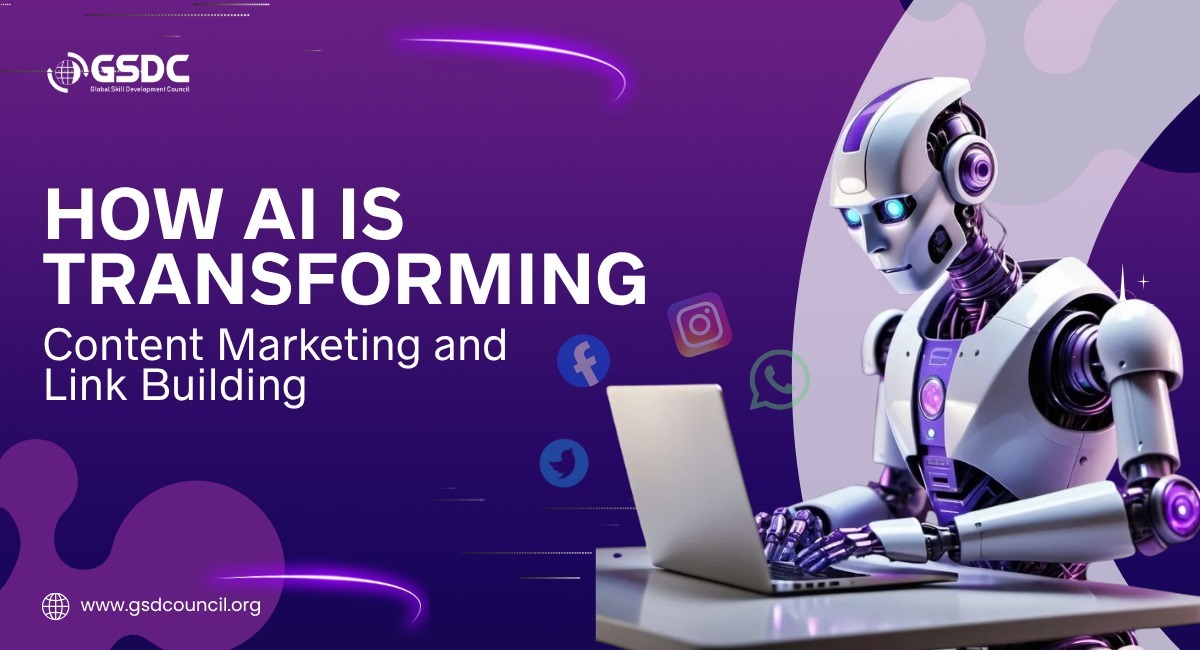
How AI is Transforming Content Marketing and Link Building in 2026
Something shifted in digital marketing over the past couple of years, and most businesses felt it before they could explain it. Traffic patterns changed. Content that used to rank stopped performing. Outreach that worked became noise. A lot of teams spent months optimising for a landscape that had already moved on.
Artificial intelligence is at the centre of that shift. Not in a theoretical, “watch this space” kind of way. In a practical, it ’s-already-affecting-your-rankings kind of way. Whether you’re running an in-house content team or managing SEO for clients, understanding what’s actually changing and why is the difference between staying competitive and falling behind.
The Old Playbook Is Broken
For years, the formula was reliable enough. Research your keywords, write consistently, build some backlinks, and let time do the work. It wasn’t glamorous, but it worked.
That formula fell apart fast. Google’s Search Generative Experience now answers queries directly on the results page – millions of users get what they need without ever clicking through to a website. At the same time, AI writing tools made it trivially easy to pump out content at scale, and everyone did. The internet got noisier, publishers got more selective, and Google got better at spotting thin content.
The bottom line: volume stopped being a competitive advantage. Quality, real expertise, and earned authority took its place.
What AI is Actually Doing to Content Marketing
- Speed is no longer your edge
Yes, ChatGPT, Claude, Gemini – these tools can turn a brief into a draft in minutes. But here’s the problem: everyone has access to the same tools. Speed is table stakes now, not a differentiator. What Google is actually rewarding is expertise, the kind that comes from doing the work, not just writing about it. Original insight. First-hand experience. Perspectives that couldn’t have been scraped from existing content and reassembled. The businesses winning right now use AI for research and drafting, then layer in genuine depth that no model can replicate.
- Generic content is losing ground – fast
AI-powered analytics has made personalisation genuinely accessible. Tools can now segment audiences by intent, buying stage, and behaviour patterns with real precision. As a result, AI summary prompts are also helping marketers shape content around highly specific audience needs instead of broad topic targeting. A blog post written for “anyone interested in SEO” is being outperformed by one written for a specific person with a specific problem. Specificity converts. The brands building content around real, defined audience problems are the ones seeing traction.
- Topic clusters replaced the keyword-first approach
Chasing individual keywords in isolation has become less and less effective. The shift to topic clusters where a central pillar page is supported by tightly connected, interlinked content – reflects how search engines now evaluate authority. AI tools have accelerated this well, helping marketers map full content architectures and identify gaps fast. The strategic thinking about which topics to own still requires a human. The execution is faster than it’s ever been.
What AI is Doing to Link Building
- Earning a backlink got harder, not easier
Here’s the counterintuitive thing about AI flooding the internet with content: it’s raised the bar for what publishers will actually link to. Editors are receiving more pitches than ever, and their standards have gone up accordingly. What earns links is original thinking, proprietary data, real case studies, and perspectives grounded in experience. If your content has no unique angle, you’re not just failing to earn links. You’re invisible.
- AI outreach is everywhere – and easy to spot
Marketers are using AI to send personalised outreach at scale. Publishers are using AI to filter templated emails into the bin. Tools like Respona and Pitchbox help agencies craft pitches that reference a prospect’s actual content and explain why a piece would genuinely fit their audience. That contextual relevance makes a real difference in response rates. But the strategy behind it, knowing which sites to target, what angle to land, still requires a human.
- Contextual links are worth more than ever
A contextual link embedded naturally in a relevant, high-authority article carries significantly more weight than a low-quality directory placement. AI is helping teams identify these opportunities at scale, scanning existing articles for relevance, authority, and fit. While AI has made it easier to spot these opportunities, converting them into actual placements still demands real human expertise and outreach skill, which is what SayNine is built around, turning identified opportunities into placed links through hands-on outreach and editorial judgment. While AI has made it easier to spot these opportunities, converting them into actual placements still demands the human expertise and outreach skills that the best link building services are built around. For businesses serious about organic growth, this is where link-building ROI is highest right now.
Where to Focus Your Efforts
- Clean up before you build.
A lot of businesses are sitting on thin, outdated content that’s actively hurting their domain authority. Refreshing those pages often delivers faster results than publishing new content. Another effective strategy is content repurposing, turning existing high-performing assets into new formats, updated articles, social content, or industry-specific resources to extend their reach and maximise their SEO value.
- Create content only you can create.
Internal expertise, original data, real client stories, anything that reflects genuine experience. This is what earns links, builds reader trust, and holds rankings when algorithm updates hit.
- Get serious about Generative Engine Optimisation.
Traditional SEO is no longer the whole picture. Platforms like Google SGE, Perplexity, and Bing Copilot are pulling answers from sources they deem authoritative, and that’s a different game. For marketers and SEO professionals looking to get ahead of this, the Global Skill Development Council (GSDC) offers a Generative AI Foundation Certification covering AI-driven content strategies, search performance, and how to build visibility in generative search environments, with practical knowledge that translates directly into better results.
The Honest Summary
AI hasn’t made content marketing and link building easier. In some ways, it’s made them harder because the barrier to entry dropped and the noise went up. What it has done is create a clear separation between businesses that treat digital marketing as a volume game and those that treat it as a trust-building exercise.
The ones building trust through genuinely useful content, earned backlinks, and a real understanding of how search is evolving are the ones who will come out ahead.
If you’re ready to move beyond surface-level SEO and content that doesn’t convert, let’s talk.


It’s interesting how you point out that AI is already affecting rankings in tangible ways. I’ve noticed similar shifts in outreach strategies where traditional link-building feels less effective. Focusing on smarter content creation and leveraging AI insights seems essential to staying competitive in this new landscape.