
A handmade soap bar or a small-batch candle often tastes and smells incredible, but if it arrives in plain, forgettable packaging, that craftsmanship never quite comes through before the first use. For independent makers, packaging is frequently the very first impression a customer forms, long before they experience the product itself.
You can generate images with AI to explore genuinely distinctive packaging directions without hiring a full branding agency, and Dreamina is particularly effective at rendering the texture and material realism that makes a packaging concept feel tangible rather than purely digital.
Here’s how to give your handmade product packaging that matches its craftsmanship.
Why packaging carries more weight for handmade goods specifically
Mass-produced items often rely on familiar branding to build trust, but handmade products succeed by communicating care and individuality. Packaging that feels generic undercuts exactly the quality that makes a handmade product special, while thoughtful packaging reinforces it before a single word is read.
Letting your materials inform the packaging concept
The actual materials used in your product — natural oils, dried botanicals, recycled fibers — can directly inspire packaging choices. A soap made with natural ingredients, for instance, pairs naturally with kraft paper, twine, and botanical accents rather than glossy plastic.
- Natural or organic products suit earthy, textured packaging materials
- Delicate or luxury items suit refined, minimal packaging with careful detail
- Playful or colorful products suit bold, graphic packaging treatments
Balancing handmade charm with a professional finish
The goal isn’t to look unfinished — it’s to look intentionally crafted. A few small, deliberate imperfections, like a slightly uneven wax seal or a hand-stamped label, can communicate authenticity without undermining the overall polish of the final presentation. For label lettering, Fontyle makes it easy to preview script and other text styles before choosing a look that feels personal but still polished.
Design your packaging concept in three moves
Dreamina makes exploring several packaging directions fast enough to compare before committing to production.
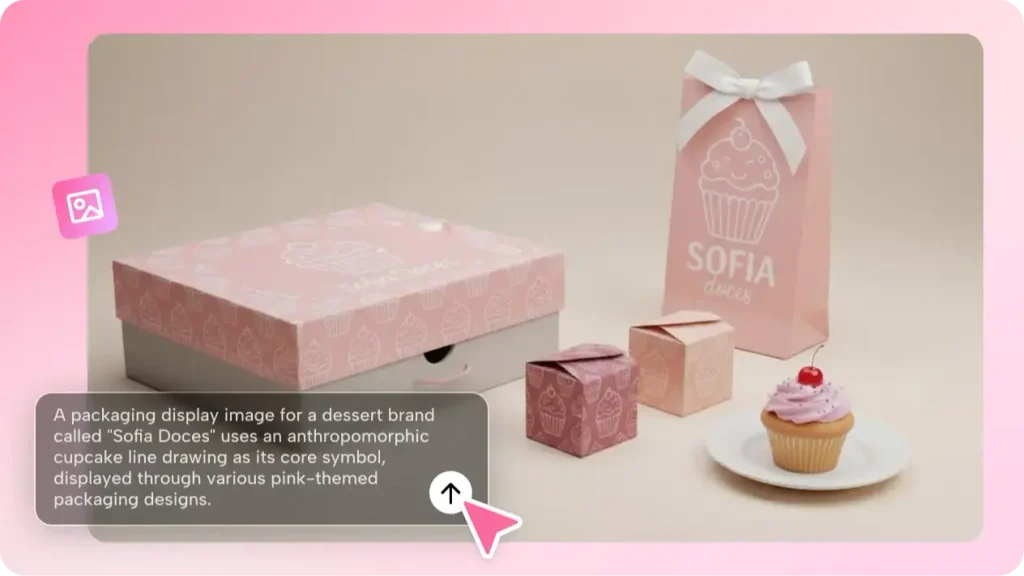
Step 1: Write a text description
Go to Dreamina and describe your product, its materials, and the packaging style you’re envisioning, including textures and color palette. Upload a photo of your actual product if you have one, for accuracy.
Example: A distinctive packaging concept illustration of a person dressed as an artisan candle maker presenting jars wrapped in linen with a hand-stamped wax label, warm natural lighting, editorial product photography style.
Step 2: Adjust parameters and generate
Select Image 5.0 Pro, powered by Seedream 5.0 Pro, for accurate material texture and realistic lighting across your packaging concept, then set your aspect ratio, canvas size, and resolution — 1K for quick concept previews, 2K for presentation-ready mockups. Click the generate icon to render your design.
Step 3: Customize and download
Refine the result using Dreamina’s tools: inpaint to adjust specific packaging details, expand to reveal more of the surrounding presentation, remove to clean up background distractions, and retouch for a final polished finish. Once it’s ready, click Download.
Dreamina’s image generation runs on Seedream 5.0 Pro
Seedream 5.0 Pro, the newest and most advanced model in its lineup, and its strengths apply directly to packaging work. Precise editing lets you test a product swap, like changing from a matte jar to a glossy one while keeping the same lighting and setup, ideal for comparing material options before committing to a final production choice.
Its layer-based control also supports brand-consistent sets, letting you carry one packaging concept across several related products, like a full line of candles or soaps, without redescribing the entire aesthetic for each new item.
Nano Banana offers a faster option for early rough concept testing, while GPT Image 2 handles prompts describing multiple packaging elements together closely, useful for denser concepts involving labels, wrapping, and seals all at once.
Choosing typography and labeling that match your brand voice
Beyond materials and color, the typography style on any visible label contributes heavily to the overall feel. Hand-lettered or stamped-looking type suits a rustic, artisanal brand, while clean sans-serif type suits a more modern, minimalist handmade line.
Designing packaging that photographs well for online sales
Since many handmade products sell primarily through photos rather than in person, designing packaging with strong visual texture and a clear focal point ensures it still looks compelling when compressed into a small product thumbnail online.
Testing how your packaging concept scales across a full product line
A single strong packaging concept should ideally extend across different product sizes and variants without losing its identity. Generating a few size and variant versions early helps catch inconsistencies before committing to a full production run.
Where these packaging concepts get used
Packaging concepts built this way support real small-batch and handmade business needs:
- Online marketplace listings and product photography
- In-person market stalls and craft fair displays
- Social media product showcases and launch posts
- Wholesale pitch materials for retail partnerships
Let your packaging match the care in your craft
A handmade product deserves packaging that reflects the same attention put into making it. With Dreamina and the material-accurate precision of Seedream 5.0 Pro, exploring genuinely distinctive packaging concepts takes an afternoon rather than a full agency engagement, and it’s free to start designing today.