
Most people don’t want to be sold to. They want answers. Helpful content gives them exactly that, and in return, your business earns attention, trust and customers. It’s why small businesses across Canada, from Edmonton landscapers to Halifax accountants, use helpful content to compete with much bigger brands.
This complete guide explains what it is, why it works, the formats that deliver the best results, how to build a content strategy step by step and how to measure success.
Table of Contents
What is content marketing?
Content marketing is the practice of creating and sharing valuable, relevant content to attract and keep a clearly defined audience, and ultimately drive profitable customer action. That definition comes from the Content Marketing Institute, and it highlights the key idea: the content must be useful to the reader first.
Instead of interrupting people with ads, this approach pulls them in with information they’re already looking for, such as how-to guides, product comparisons, videos and case studies.
Why content marketing works
- It builds trust. Helpful content shows your expertise before anyone talks to sales.
- It powers SEO. Search engines rank pages that answer questions well. Content and SEO go hand in hand. If you’re new to SEO, read what is SEO?
- It compounds over time. A strong article can bring in visitors for years.
- It supports every channel. Content fuels your social media, email newsletters and ads.
- It helps you appear in AI answers. Clear, expert content is more likely to be cited by AI assistants.
The best content marketing formats
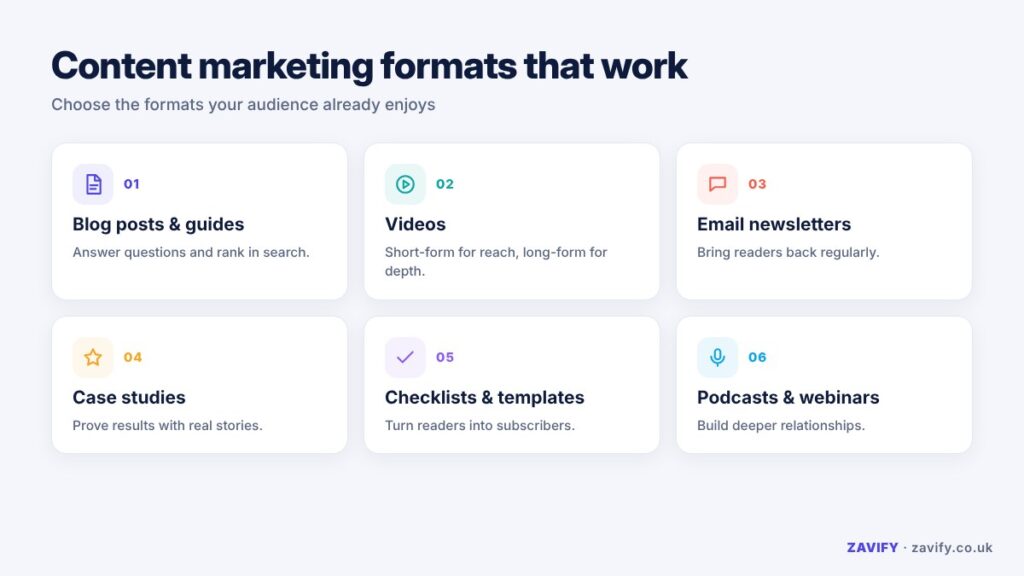
Blog posts and articles
The foundation of most content programmes. Answer common questions, explain processes and compare options. Long-form guides can rank for many related searches.
Videos
Short videos on Instagram, TikTok and YouTube Shorts build awareness, while longer YouTube videos work well for tutorials and product demos.
Email newsletters
Newsletters keep your audience engaged and bring them back to your content. Remember that Canadian commercial emails must follow CASL consent rules.
Case studies and testimonials
Real customer stories prove your results and help people make buying decisions.
Guides, checklists and templates
Downloadable resources are excellent lead magnets that turn readers into subscribers.
Podcasts and webinars
Audio and live formats help you build deeper relationships and showcase expertise.
Social media posts
Short posts, carousels and stories distribute your content and start conversations.
How to build a content marketing strategy in 7 steps
A content strategy turns random posting into a plan that supports your business goals.
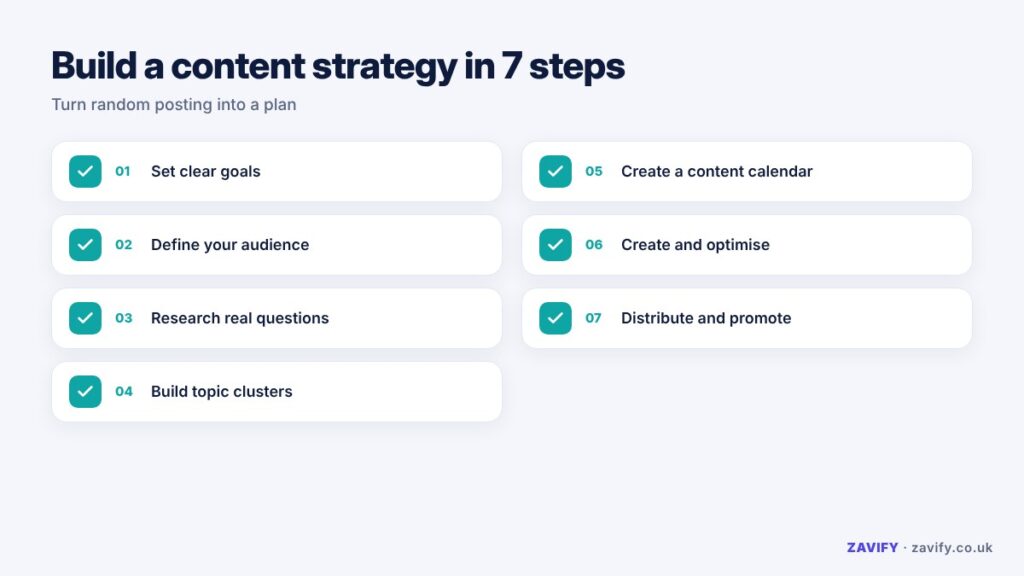
Step 1: Set clear goals
Decide what your content should achieve: more organic traffic, more leads, better customer retention or stronger brand awareness. Tie each goal to a number you can track.
Step 2: Define your audience
Write a short profile of your ideal customer: their role, problems, questions and where they look for information. The better you know them, the better your content will be.
Step 3: Research topics
Use keyword research tools, Google’s “People also ask” boxes, customer emails and sales calls to find the questions people actually ask. Our list of SEO keyword examples shows how to spot opportunities.
Step 4: Build topic clusters
Create one in-depth “pillar” guide for each core topic, supported by detailed articles that link back to it. This structure helps both readers and search engines understand your expertise.
Step 5: Create a content calendar
Plan what you’ll publish, when and on which channels. Consistency matters more than volume. One excellent article a week beats five rushed ones.
Step 6: Create and optimise
Write for people first, then optimise with clear titles, headings, images and internal links. If you use WordPress, follow these WordPress SEO best practices.
Step 7: Distribute and promote
Share every piece through email, social media and partnerships. Great content still needs promotion to reach its audience.
Repurpose content to get more value
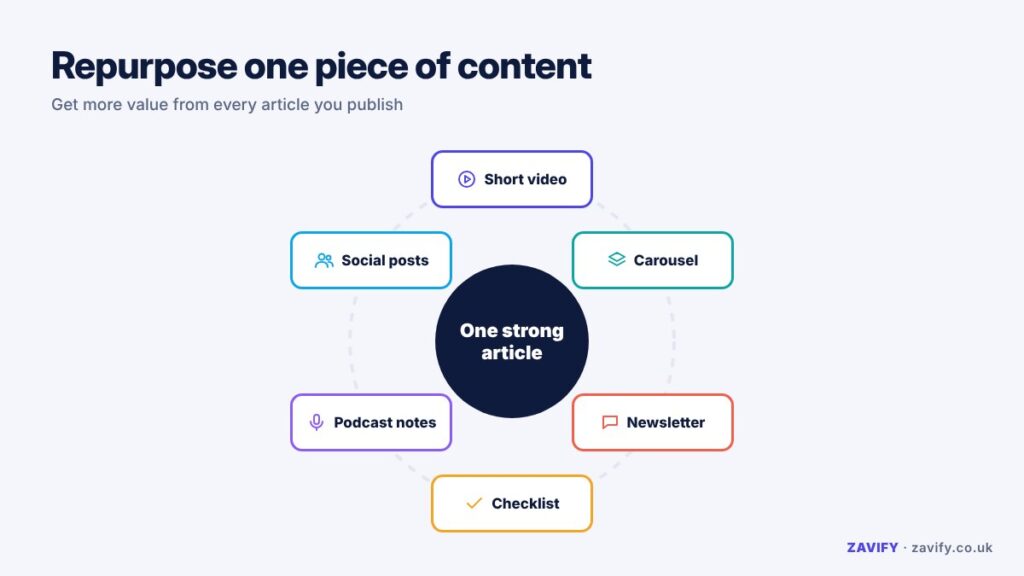
One strong article can become:
- a short video or Reel summarising the key points,
- a LinkedIn carousel or Instagram post,
- an email newsletter,
- a downloadable checklist, and
- talking points for a podcast or webinar.
Repurposing saves time and helps your content strategy reach people on the platforms they prefer.
Using AI in content marketing
AI tools can speed up research, outlines and editing, but they work best as assistants rather than replacements. Readers and search engines reward first-hand experience, original insights and accurate information. Read more about how AI is transforming content marketing and link building.
How to measure content marketing success
Track metrics that connect content to business results:
- Organic traffic and rankings for target topics (Google Search Console).
- Engagement: time on page, scroll depth and return visits.
- Leads and conversions: newsletter sign-ups, downloads, enquiries and sales from content.
- Assisted conversions: content people read before buying, even if they converted later.
- Visibility in AI answers: whether AI assistants mention or cite your brand.
Content marketing examples for small businesses
- Local trades: a roofing company publishes guides on spotting storm damage and comparing roofing materials for Canadian winters.
- Professional services: an accounting firm explains tax deadlines and common deductions for small businesses.
- Ecommerce: a gear store creates buying guides and how-to videos for camping in Canadian national parks.
- Healthcare: a dental clinic answers common patient questions about treatments and recovery.
Common content marketing mistakes
- Writing about your company instead of your customers’ problems.
- Publishing without a content strategy or clear goals.
- Ignoring SEO basics like titles and headings.
- Creating content but never promoting it.
- Giving up after a few months, before results compound.
Frequently asked questions
What is content marketing in simple terms?
Content marketing is creating useful content, such as articles, videos and guides, that attracts potential customers and builds trust so they choose your business.
How long does content marketing take to work?
Most businesses see early traction in three to six months, with stronger results after a year of consistent publishing.
Is content marketing worth it for small businesses?
Yes. It helps small businesses compete with larger brands, build authority and attract customers without paying for every click.
What’s the difference between content marketing and a content strategy?
Content marketing is the overall practice. A content strategy is your specific plan for what to create, for whom, on which channels and how to measure results.
Final thoughts
This approach rewards businesses that genuinely help their customers. Start with clear goals, understand your audience, build a simple content strategy and publish consistently. Over time, your content becomes an asset that attracts customers every single day. For the bigger picture, see our guide to what digital marketing is.