

Is Shopify Good for SEO?
If you’re planning to start an online store, one of the most important questions you might ask is: Is Shopify good for SEO? Search Engine Optimization (SEO) plays a crucial role in helping your store appear in search results and attract organic traffic.
The good news is that Shopify is considered an SEO-friendly eCommerce platform. It includes many built-in features that help store owners optimize their websites for search engines like Google. However, like any platform, it also has some limitations you should understand.
In this guide, we’ll explore Shopify’s SEO capabilities, benefits, limitations, and practical tips to help your store rank higher in search results.
What Makes Shopify SEO-Friendly?
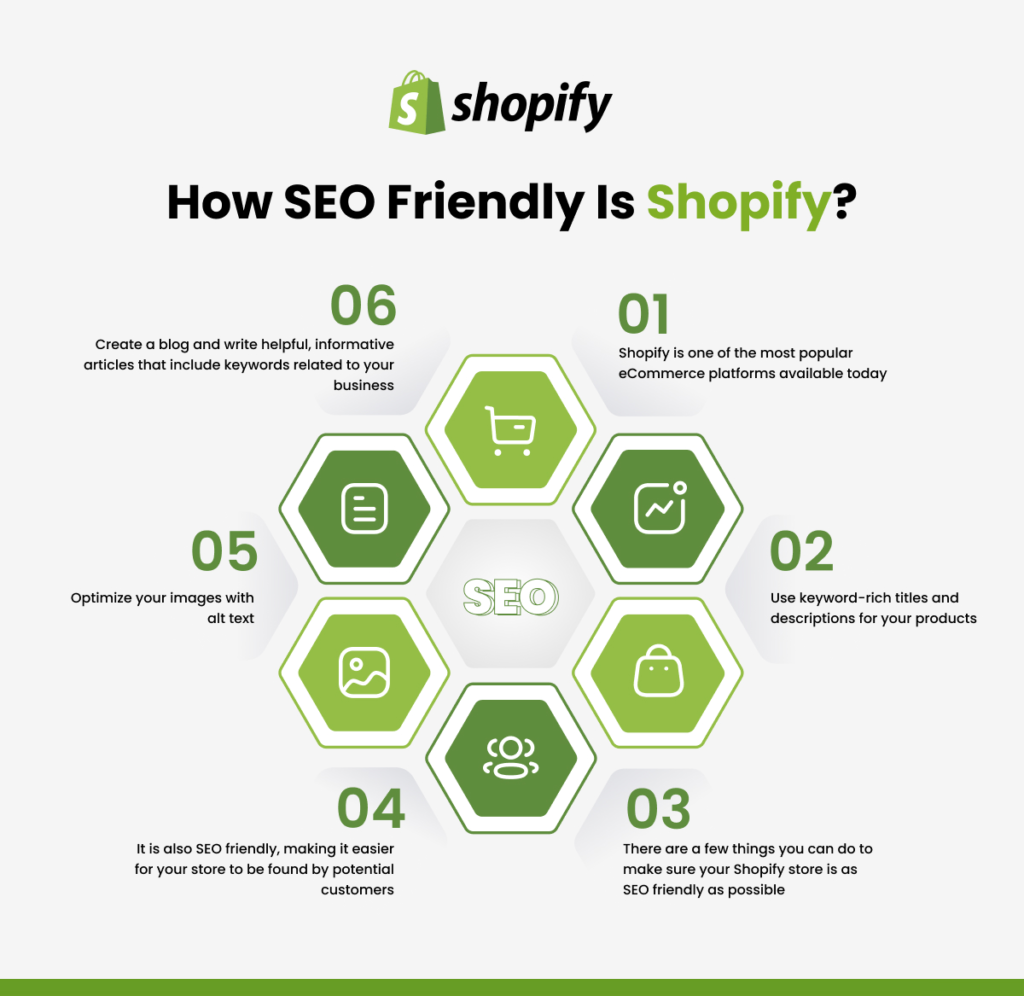
Shopify is designed to help businesses create and manage online stores easily while also supporting SEO best practices.
Some key SEO-friendly features Shopify provides include:
- customizable title tags and meta descriptions
- mobile-friendly themes
- secure HTTPS encryption
- automatic sitemap generation
- fast hosting and site speed
- clean and structured URLs
- built-in blogging functionality
These features help search engines crawl, index, and rank your pages more effectively.
Key SEO Features of Shopify
Customizable Page Titles and Meta Descriptions
Shopify allows you to edit SEO titles and meta descriptions for:
- product pages
- collection pages
- blog posts
- homepage
Optimizing these elements with relevant keywords improves your visibility in search engine results and increases click-through rates.
Mobile-Friendly Store Design
Mobile optimization is a major ranking factor for search engines. Most Shopify themes are fully responsive, meaning they automatically adapt to mobile phones, tablets, and desktops.
A mobile-friendly website improves user experience and helps your store perform better in search rankings.
Fast and Secure Hosting
Shopify provides reliable hosting and fast loading speeds, which are important factors for SEO.
Fast websites reduce bounce rates and improve engagement, both of which signal to search engines that your site provides a good user experience.
Additionally, Shopify includes SSL security (HTTPS) for all stores, which also helps with search engine trust.
Automatic Sitemap and SEO Basics
Shopify automatically generates a sitemap.xml file, which helps search engines discover and index your website pages.
It also includes a robots.txt file that guides search engines on which pages should or should not be crawled.
These technical SEO elements are handled automatically, making it easier for beginners.
Built-In Blogging System
Content marketing is one of the most powerful ways to improve SEO. Shopify includes a blog feature, allowing store owners to publish articles related to their niche.
Examples of SEO-friendly blog content include:
- product tutorials
- buying guides
- industry news
- how-to articles
Regular blogging can bring additional organic traffic to your store.
Shopify SEO Limitations
Although Shopify is SEO-friendly, there are some limitations compared to fully customizable platforms.
Limited URL Structure Control
Shopify automatically uses specific URL paths, such as:
/products//collections//blogs/
While this structure is clean, it does limit full URL customization for advanced SEO strategies.
Duplicate Content Possibilities
Some Shopify stores may create duplicate content when products appear in multiple collections. Shopify handles this by using canonical tags to signal the main version of a page to search engines.
Less Technical SEO Flexibility
Compared to open-source platforms, Shopify offers limited control over some advanced SEO settings. However, many SEO apps in the Shopify App Store can help extend functionality.
Tips to Improve SEO on Shopify
Even with a good platform, strong SEO requires consistent optimization.
Here are some practical tips to improve your Shopify store’s search rankings:
Perform Keyword Research
Identify keywords your target customers are searching for and use them naturally in:
- product titles
- descriptions
- headings
- blog content
Optimize Product Descriptions
Avoid copying manufacturer descriptions. Instead, write unique and detailed product descriptions that include relevant keywords.
This improves both SEO and user engagement.
Optimize Images
Images should be compressed to maintain fast loading speeds. Add alt text that describes the image and includes relevant keywords.
Create Helpful Blog Content
Publishing educational or helpful articles can attract visitors who are searching for information related to your products.
Over time, this helps build your store’s authority in search engines.
Build Quality Backlinks
Backlinks from reputable websites help improve your domain authority.
You can earn backlinks through:
- guest blogging
- influencer collaborations
- industry partnerships
- social media promotion
Is Shopify Better Than Other eCommerce Platforms for SEO?
Shopify offers a strong balance between ease of use and SEO capability. While some platforms offer more customization, Shopify simplifies the process and handles many technical aspects automatically.
For most businesses, Shopify provides everything needed to build a search-friendly online store.
Final Thoughts
So, is Shopify good for SEO? Yes, Shopify is a reliable and SEO-friendly platform for building an online store. With built-in SEO tools, fast hosting, mobile optimization, and blogging features, it provides a solid foundation for ranking in search engines.
However, SEO success ultimately depends on how well you optimize your store, create valuable content, and build authority online. By combining Shopify’s built-in features with smart SEO strategies, you can increase organic traffic and grow your eCommerce business.





2 Comments