How Important Is the Authentication Process in Email Marketing?
The authentication process in email marketing is extremely important because it helps ensure that your emails are trusted, delivered successfully, and protected from being marked as spam. Email authentication verifies that the sender is legitimate and that the message truly comes from your domain. Without proper authentication, even well-designed marketing emails may never reach your audience’s inbox.
In modern email marketing, authentication is not optional — it is a basic requirement for successful campaigns. Businesses that ignore authentication often face low delivery rates and poor results.
What Is Email Authentication?
Email authentication is a set of security methods that verify the identity of the sender. It tells email providers like Gmail or Outlook that your email is safe and trustworthy.
Authentication proves that:
- The sender is genuine
- The email domain is verified
- The message is not spam
- The content has not been changed
This process helps email services decide whether your message should go to the inbox or the spam folder.
Why Authentication Is Important in Email Marketing
Email authentication plays a major role in the success of marketing campaigns. Without it, your emails may not reach customers.
1. Improves Email Deliverability
Authentication increases the chances that your emails reach the inbox instead of the spam folder. When email providers trust your domain, they allow more messages to be delivered successfully.
2. Builds Customer Trust
Customers are more likely to open emails from verified senders. Authentication helps protect your brand reputation and shows professionalism.
3. Protects Against Fraud
Authentication prevents hackers from sending fake emails using your business name. This protects both your company and your customers.
4. Increases Open Rates
When emails reach the inbox and appear trustworthy, more people open them. This leads to better marketing performance.
5. Supports Long-Term Email Marketing Success
Authentication helps maintain a strong sender reputation, which is essential for long-term email marketing growth.
Main Types of Email Authentication
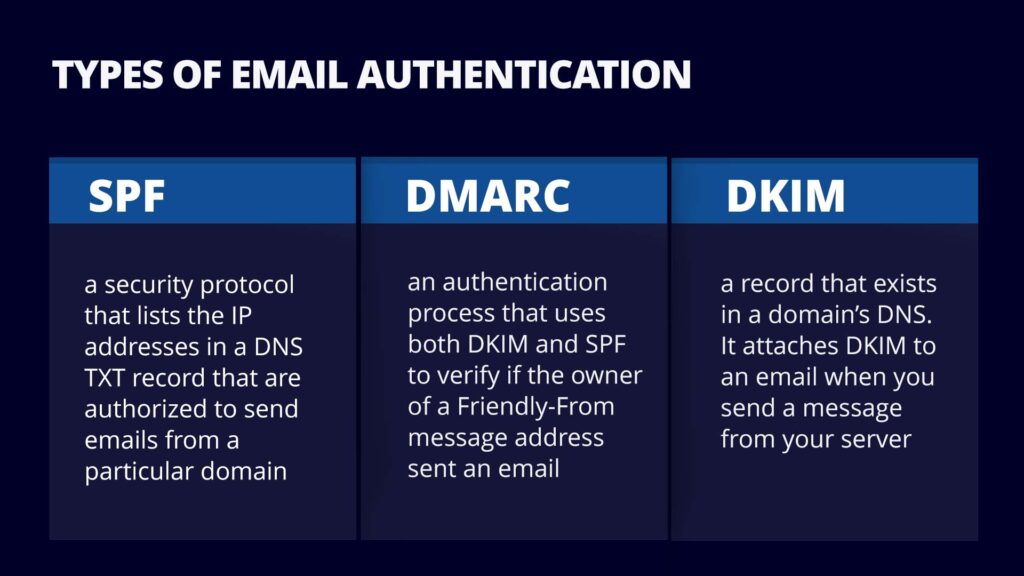
Most email marketing systems use three main authentication methods.
SPF (Sender Policy Framework)
SPF verifies that the email is sent from an authorized server.
It helps prevent fake senders from using your domain.
DKIM (DomainKeys Identified Mail)
DKIM adds a digital signature to emails.
It confirms that the message was not changed after sending.
DMARC (Domain-based Message Authentication)
DMARC works with SPF and DKIM to protect your domain.
It tells email providers how to handle suspicious emails.
Using all three methods provides the strongest protection.
Problems Without Email Authentication
Businesses that do not use authentication often face serious problems.
Common issues include:
- Emails going to spam
- Low open rates
- Blocked domains
- Lost customers
- Poor campaign results
Even good marketing content will fail if emails are not delivered properly.
How to Set Up Email Authentication
Most email marketing platforms provide simple authentication guides.
Typical steps include:
- Verifying your domain
- Adding DNS records
- Setting up SPF
- Enabling DKIM
- Configuring DMARC
Once configured, authentication works automatically in the background.
Final Thoughts
The authentication process is one of the most important parts of email marketing. It ensures that your emails reach the inbox, builds trust with customers, and protects your brand from fraud. Businesses that invest in proper email authentication usually see better results and stronger long-term growth. If you want successful email marketing campaigns, authentication should always be a top priority.