
Email Marketing Mastery: A Step-by-Step Guide for Growth
Everything businesses need to know about building successful marketing campaigns through email.
What is Email Marketing?
Email Marketing is a powerful digital marketing strategy that involves sending targeted messages directly to a subscriber list through their email address. As one of the most cost-effective marketing channels available today, it allows businesses to communicate with their target audience, nurture potential customers, and build lasting customer relationships.
Unlike other marketing campaigns that require significant investment, email marketing efforts provide an impressive Return On Investment.
Small businesses and large enterprises alike use this marketing channel to stay top-of-mind with their audience, promote new products, and drive customer engagement across mobile devices and desktop platforms. The beauty of an email marketing strategy lies in its versatility and measurability.
Marketing teams can track click-through rates, monitor the conversion rate, analyze the bounce rate, and measure the unsubscribe rate to continuously improve their email marketing efforts and achieve their email marketing goals.
Types of Email Marketing
Understanding the different types of emails helps businesses craft effective email marketing campaigns. So, each type serves a specific purpose in the customer journey and contributes to overall campaign performance.
Welcome Emails
Firstly, A welcome email is often the first touchpoint with new subscribers. These messages set the tone for future communication and typically achieve higher click-through rates than other email types.
Secondly, Business owners should craft compelling welcome emails that introduce their brand, explain what subscribers can expect, and potentially offer a special offer to encourage immediate engagement.After that, Signup forms that lead to well-designed welcome emails help convert visitors into engaged customers.
Email Newsletters
An email newsletter keeps subscribers informed about company updates, industry news, product updates, and relevant content.Similarly
This type regularly appears in marketing campaigns to maintain brand awareness and build relationships with the audience.Next, Newsletters work best when they provide value beyond promotional content and arrive at consistent send times.
Promotional Emails
Promotional emails drive immediate action by highlighting sales, discounts, or new products. These messages are essential for moving subscribers through the sales funnel.To maximize the impact of these campaigns, many marketers now integrate a Dynamic QR code generator into their email designs. This allows you to update the destination URL of a promotion even after the email has been sent—fixing broken links or updating a “deal of the day” in real-time—ensuring that every click or scan leads to a live, relevant offer.
However, email marketers must balance the number of emails sent to avoid overwhelming their subscriber list or ending up in spam folders. Moreover, the right time to send promotional emails often depends on customer data and past engagement patterns.
Lead Nurturing Emails and Re-engagement Emails
Lead nurturing emails guide potential customers through their decision-making process with relevant content tailored to their interests. however, these automated sequences demonstrate an effective way to build customer loyalty over time.
Re-engagement emails specifically target inactive subscribers who haven’t interacted with recent messages. Both types focus on customer engagement and help maintain a healthy, active subscriber list.
Transactional Emails
Transactional emails include confirmation emails, order receipts, shipping notifications, and password reset messages.
These automated messages maintain high open rates because recipients expect and need the information they contain. Cart emails that remind customers about abandoned purchases also fall into this category and represent a powerful tool for recovering lost sales from an online store.
Feedback or Survey Emails
These emails gather valuable customer data and insights about customer satisfaction. They help businesses understand what works in their email marketing strategy and where improvements are needed. Feedback emails demonstrate that companies value customer input and want to improve customer service.
Milestone Emails
Milestone emails celebrate important moments in customer relationships, such as birthdays, anniversaries of first purchase, or loyalty program achievements. These personalized messages strengthen customer loyalty and show that businesses pay attention to individual customers rather than treating everyone the same. For example, a brand might highlight a popular product like the Tissot PRX in a milestone message, offering it as a special reward or exclusive discount to commemorate the occasion.
What Does an Email Marketer Do?
Email marketers are specialists who plan, execute, and optimize email marketing campaigns. Their responsibilities span strategy development, content creation, technical implementation, and performance analysis. These professionals work as part of a marketing team or independently for small businesses.
Daily tasks include writing email copy, designing email templates using an email builder or email editor, managing the subscriber list through list segmentation, and conducting A B testing to improve results. They must understand email design principles, know the best way to avoid spam filters, and maintain a positive sender reputation.
Email marketers also analyze email performance metrics like click rates, conversion rate, and email engagement. They use this data to refine their email strategy and identify use cases for email marketing automation.
Understanding the target audience and delivering the right content to the right people at the right time requires both analytical skills and creative thinking.
So, Customer support often intersects with email marketing as these professionals handle subscriber questions and manage the customer journey across different touchpoints. They might collaborate with customer service teams to ensure consistent messaging and maintain high-quality interactions with email subscribers.
Email Marketing Jobs
document.addEventListener(“DOMContentLoaded”, function () { const data = { labels: [ “Email Marketing Specialist”, “Email Campaign Manager”, “Automation Specialist”, “Email Designer / Content”, “Analytics & Support Roles” ], datasets: [{ data: [40, 20, 15, 15, 10], backgroundColor: [ “#1E88E5”, “#43A047”, “#FB8C00”, “#8E24AA”, “#E53935” ], borderColor: “#ffffff”, borderWidth: 2, hoverOffset: 15 }] };const config = { type: “doughnut”, data: data, options: { responsive: true, maintainAspectRatio: true, cutout: “60%”, animation: { animateScale: true, animateRotate: true, duration: 1500 }, plugins: { title: { display: true, text: “2025 Email Marketing Jobs Distribution”, font: { size: 20, weight: “bold” } }, legend: { position: “bottom”, labels: { boxWidth: 14, padding: 15 } }, tooltip: { callbacks: { label: function (context) { let value = context.raw; let total = context.dataset.data.reduce((a, b) => a + b, 0); let percentage = ((value / total) * 100).toFixed(1); return context.label + ‘: ‘ + percentage + ‘%’; } } } } } };new Chart( document.getElementById(“emailJobs2025”), config ); });The field offers diverse career opportunities across industries and company sizes. Entry-level positions often focus on execution, creating email content and managing day-to-day email marketing campaigns under supervision. These roles provide excellent training in email platform technologies and fundamental marketing principles.
Mid-level roles involve strategy development, email marketing automation setup, and campaign management with greater autonomy. Professionals at this level often own specific segments of the email strategy or manage particular types of emails. They work closely with other marketing team members to align email initiatives with broader marketing campaigns. In addition, applying effective customer retention strategies helps ensure these campaigns not only attract new subscribers but also keep existing customers engaged and loyal.
Senior positions include Email Marketing Manager, Director of Email Marketing, or Marketing Automation Specialist. These roles require deep expertise in creating successful email marketing campaign strategies, managing budgets, and leading teams.
Leaders in this space understand how email marketing fits into the complete digital marketing strategy and can demonstrate measurable benefits of email marketing to stakeholders.
Many professionals work in the United States and globally for agencies, corporations, or as freelance consultants serving multiple clients. The rise of AI tools has expanded the role’s technical aspects while also creating efficiency gains that allow email marketers to focus more on strategy and creativity.
Benefits of Email Marketing
The benefits of email marketing extend far beyond simple communication. This channel delivers exceptional Return On Investment compared to other marketing channels, with some studies showing returns of up to 40 dollars for every dollar spent. This makes it particularly valuable for small businesses operating with limited budgets.
Direct access to the target audience represents another key advantage. Unlike social media where algorithms control visibility, emails land directly in subscribers’ inboxes. This creates opportunities to nurture potential customers and maintain customer relationships without platform intermediaries. The ability to reach mobile devices means messages reach people wherever they are.
Measurability sets email apart from traditional marketing. Business owners can track exactly how many people opened messages, what click-through rates different campaigns achieved, and which email subject lines performed best. This data-driven approach enables continuous improvement through A B tests and optimization of campaign performance.
AI in Email marketing automation creates efficiency while personalizing the customer journey. Automated sequences handle lead generation, welcome new subscribers, and re-engage inactive subscribers without constant manual effort. This scalability means marketing teams can accomplish more with existing resources.
Building brand awareness and customer engagement happens naturally through consistent, valuable communication. Email helps businesses stay top-of-mind, announce new products, and strengthen customer loyalty. These ongoing touchpoints contribute to long-term business growth rather than just immediate sales.
Email Marketing Best Practices and Tips
Following email marketing best practices ensures messages reach inboxes and drive results. Start by building a permission-based subscriber list through clear signup forms rather than purchasing lists. Adding measures to stop form spam ensures only legitimate subscribers join your list This foundation prevents spam folder issues and maintains a positive sender reputation.
Compelling subject lines determine whether emails get opened. Keep them concise, clear, and honest, and avoid spam triggers like excessive punctuation or ALL CAPS. Use A/B testing to experiment with different styles and discover what resonates most with your audience.
Personalization should go beyond simply adding a subscriber’s name. Use customer data to segment your list based on preferences, behavior, or purchase history. This allows you to deliver relevant content to the right audience, increasing engagement and conversion rates.
Email design is especially important in a mobile-first world. Use responsive templates that look great on all screen sizes, include clear calls-to-action, and maintain a clean, scannable layout. Pay attention to color contrast, font size, button placement, and image optimization to ensure fast loading and visual appeal.
Timing can significantly impact results. Analyze performance data to determine when subscribers are most active and adjust your sending schedule accordingly. Also, consider the customer journey stage when deciding how often to send emails.
Regular A/B testing helps refine subject lines, content, and even landing pages. Monitor key metrics like bounce rate and unsubscribe rate to maintain a healthy, engaged subscriber list and continuously improve performance.
Top 5 Email Marketing Tools I’ve Actually Used
I’ve tested dozens of email platforms over the past three years managing e-commerce campaigns. Here are the five tools I still use today, with honest pricing and real experience.
1. ActiveCampaign – The Automation Powerhouse
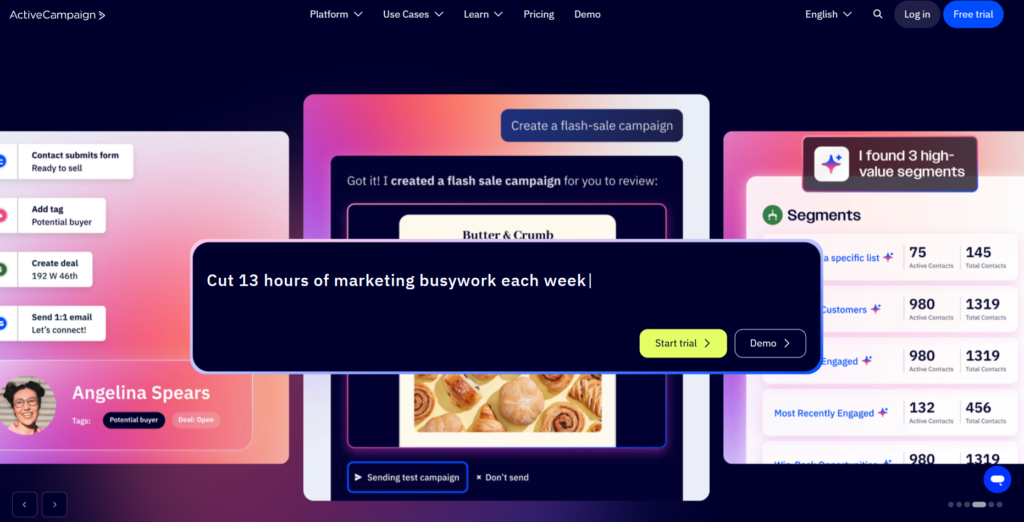
My experience: I’ve used ActiveCampaign since 2023 for advanced drip automations, and the workflow builder is incredibly powerful.
Pricing:
- Starter: $15/month (500 contacts)
- Plus: $49/month (500 contacts)
- Professional: $79/month (500 contacts)
Why I use it: The conditional automation logic is unmatched. I built a 12-step nurture sequence that adjusts based on customer behavior—opens, clicks, and purchases. This complexity would be impossible in simpler tools.
Best for: Businesses needing sophisticated automation and CRM features.
2. Mailchimp – Reliable for Beginners
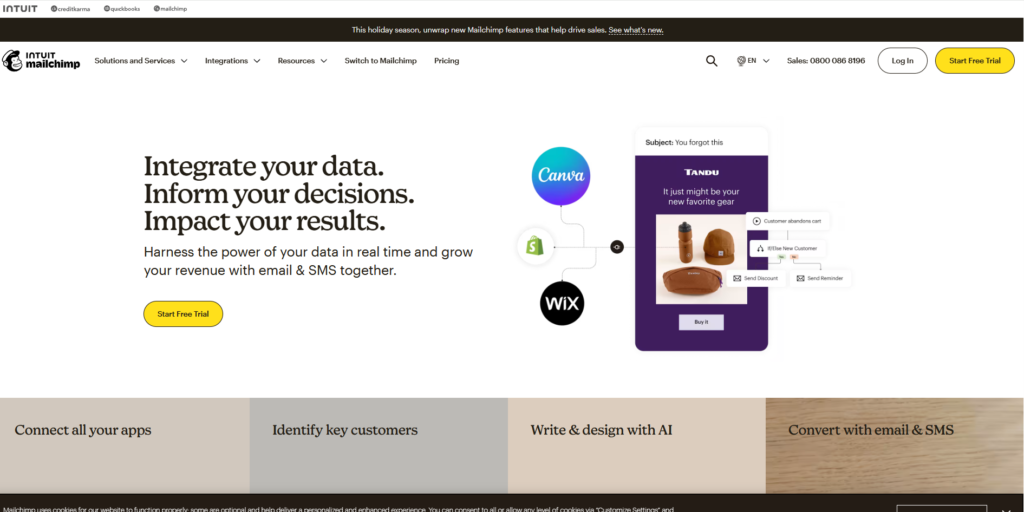
My experience: My first email platform in 2022. Still solid for straightforward campaigns.
Pricing:
- Free: Up to 500 contacts
- Essentials: $13/month (500 contacts)
- Standard: $20/month (includes automation)
Why it works: The interface is intuitive, templates look professional, and the free plan actually functions well for small lists.
Best for: Beginners and small businesses under 2,000 subscribers.
3. Snov.io – Cold Email Champion
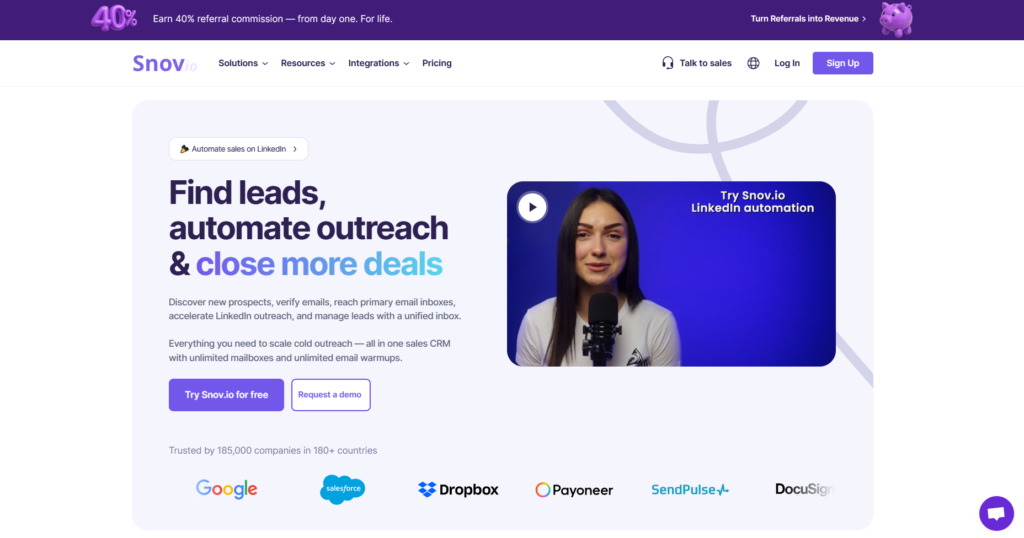
My experience: I use Snov.io specifically for B2B outreach and cold email campaigns, not traditional newsletters.
Pricing:
- Trial: 50 credits free
- Starter: $39/month (1,000 credits)
- Pro: $99/month (5,000 credits)
Why it’s different: Built for prospecting and outreach automation. I’ve used it to find verified email addresses and run targeted cold campaigns with decent deliverability (around 92%).
Best for: B2B sales teams and lead generation focused businesses.
4. Zapier – The Integration Glue
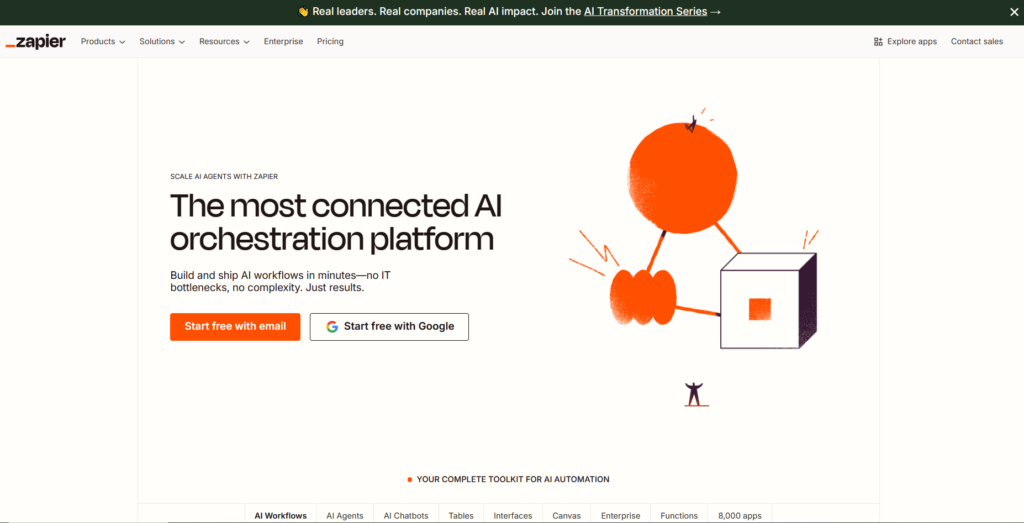
My experience: Not technically an email tool, but essential for AI orchestration across my entire email workflow.
Pricing:
- Free: 100 tasks/month
- Starter: $19.99/month (750 tasks)
- Professional: $49/month (2,000 tasks)
Why I need it: I use Zapier to connect my email platforms with CRM, e-commerce stores, and AI tools like ChatGPT for automated content generation. For example, when a customer makes a purchase, Zapier triggers a personalized email sequence in ActiveCampaign.
Best for: Anyone connecting multiple tools and automating workflows.
5. MailerLite – Best Value
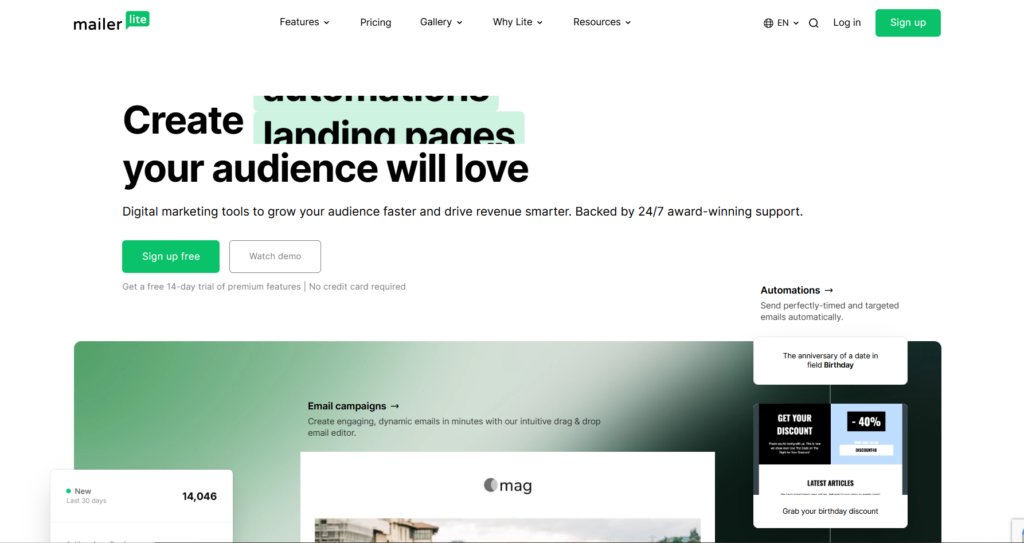
My experience: Currently managing a 3,200-subscriber project on MailerLite since 2024.
Pricing:
- Free: Up to 1,000 subscribers
- Growing Business: $10/month (1,000 contacts)
- Advanced: $21/month (1,000 contacts)
Why I’m impressed: Generous free plan, modern interface, and automation included. Paying $32/month for 3,000+ contacts—that would cost $100+ elsewhere.
Best for: Budget-conscious businesses needing solid features without premium pricing.
document.addEventListener(“DOMContentLoaded”, function () { const canvas = document.getElementById(“emailToolsRadar”); if (!canvas) return; // Safety check const ctx = canvas.getContext(“2d”);const data = { labels: [“Automation Power”, “Ease of Use”, “Pricing Value”, “Scalability”, “Best Use Fit”], datasets: [ { label: “ActiveCampaign”, data: [5, 3, 3, 5, 5], fill: true, backgroundColor: “rgba(30,136,229,0.2)”, borderColor: “#1E88E5”, pointBackgroundColor: “#1E88E5”, tension: 0.4 }, { label: “Mailchimp”, data: [3, 5, 3, 3, 4], fill: true, backgroundColor: “rgba(67,160,71,0.2)”, borderColor: “#43A047”, pointBackgroundColor: “#43A047”, tension: 0.4 }, { label: “Snov.io”, data: [4, 3, 3, 3, 5], fill: true, backgroundColor: “rgba(251,140,0,0.2)”, borderColor: “#FB8C00”, pointBackgroundColor: “#FB8C00”, tension: 0.4 }, { label: “Zapier”, data: [4, 2, 3, 5, 4], fill: true, backgroundColor: “rgba(142,36,170,0.2)”, borderColor: “#8E24AA”, pointBackgroundColor: “#8E24AA”, tension: 0.4 }, { label: “MailerLite”, data: [3, 4, 5, 4, 4], fill: true, backgroundColor: “rgba(229,57,53,0.2)”, borderColor: “#E53935”, pointBackgroundColor: “#E53935”, tension: 0.4 } ] };const config = { type: “radar”, data: data, options: { responsive: true, maintainAspectRatio: true, elements: { line: { borderWidth: 3 } }, scales: { r: { min: 0, max: 5, ticks: { stepSize: 1, backdropColor: ‘transparent’ }, angleLines: { color: ‘#ddd’ }, grid: { color: ‘#eee’ }, pointLabels: { font: { size: 14 } } } }, plugins: { title: { display: true, text: “Top 5 Email Marketing Tools – Comparison (2025)”, font: { size: 20, weight: ‘bold’ } }, legend: { position: “bottom”, labels: { padding: 15 } }, tooltip: { callbacks: { label: function(context) { return context.dataset.label + ‘: ‘ + context.raw + ‘/5’; } } } }, animation: { duration: 1200, easing: ‘easeOutBounce’ } } };new Chart(ctx, config); });Email Marketing Glossary
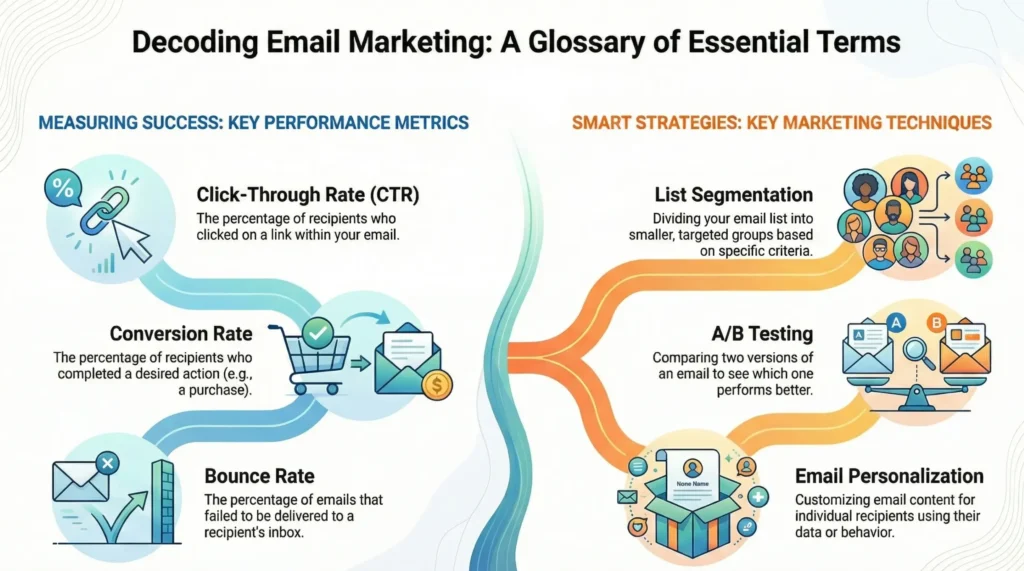
Understanding key terminology helps navigate email marketing more effectively. This glossary covers essential terms that email marketers encounter regularly.
1) Click-Through Rates
The percentage of email recipients who clicked on one or more links in an email, measuring engagement and interest.
2) Conversion Rate
The percentage of recipients who completed a desired action after clicking through from an email, such as making a purchase or signing up for a service.
3) Bounce Rate
The percentage of emails that couldn’t be delivered to recipients’ inboxes, divided into hard bounces (permanent issues) and soft bounces (temporary problems).
4) Unsubscribe Rate
The percentage of subscribers who opt out of receiving future emails, serving as a key indicator of content relevance and email frequency appropriateness.
5) List Segmentation
The practice of dividing a subscriber list into smaller groups based on specific criteria like demographics, behavior, or preferences.
6) A B Testing
Also called A B tests, this method compares two versions of an email to determine which performs better based on specific metrics.
7) Email Personalization
The practice of customizing email content for individual recipients based on their data, preferences, or behavior to improve relevance and engagement.
8) Sender Reputation
A score that email providers assign based on sending practices, which affects whether emails reach inboxes or get filtered as spam.
10 Email Marketing Strategies for Success
Implementing proven strategies transforms email marketing efforts from basic communication into a powerful growth engine. These approaches help create a successful email marketing campaign that drives measurable results.
1. Define Clear Email Marketing Goals
Every effective email marketing strategy starts with specific, measurable goals. Whether aiming to increase customer engagement, boost the conversion rate, drive traffic to landing pages, or improve customer loyalty, clear objectives guide decision-making and help measure campaign performance accurately.
2. Build and Maintain a High-Quality Subscriber List
Focus on organic growth through signup forms placed strategically on landing pages and throughout the website. Regular list cleaning removes inactive subscribers and maintains list health. A smaller, engaged subscriber list outperforms a large, uninterested one for achieving better email performance and lower bounce rate.
3. Segment Your Audience for Better Targeting
Use customer data to create meaningful segments within the subscriber list. This allows delivering relevant content to the right people based on their interests, purchase history, or engagement level. Segmentation improves click-through rates and helps potential customers move through the sales funnel more effectively.
4. Implement Email Marketing Automation
Automation handles repetitive tasks while maintaining personalization. Set up automated sequences for welcome emails, cart emails for abandoned purchases, and Lead nurturing emails that guide subscribers toward conversion. This approach saves time for the marketing team while ensuring consistent communication throughout the customer journey.
5. Create Compelling Email Content
High-quality email copy that provides value keeps subscribers engaged. Balance promotional emails with educational content, Good Emails that entertain, and updates about new products or services. Strong email subject lines convince recipients to open messages, while clear calls-to-action guide them toward desired outcomes.
6. Optimize for Mobile Devices
With most emails now opened on mobile devices, responsive email design is essential. Use email templates that adapt to different screen sizes, keep email content concise, and ensure buttons are easily tappable. Testing across various devices prevents delivery issues and improves the user experience.
7. Test and Optimize Continuously
Regular B testing reveals what resonates with the target audience. Experiment with different email subject lines, send times, email design elements, and calls-to-action. Track email engagement metrics and the conversion rate to identify winning approaches. Small improvements compound over time to significantly enhance overall email marketing efforts.
8. Focus on Deliverability
Maintain a strong sender reputation by following best practices that keep messages out of spam folders. This includes using a reputable email service provider, avoiding spam filters through honest subject lines, honoring unsubscribe requests promptly, and maintaining list hygiene. Monitor the bounce rate and address issues that could harm deliverability.
9. Personalize the Customer Experience
Beyond basic email personalization like using names, leverage customer data to create truly relevant experiences. Send product recommendations based on browsing history, celebrate milestones, and tailor content to where subscribers are in their customer journey. So, this effective way of connecting strengthens customer relationships and drives better results.
10. Integrate Email with Your Overall Marketing Strategy
Email works best as part of a complete digital marketing strategy rather than in isolation. Coordinate email marketing campaigns with social media, content marketing, and other marketing channels. So, Use email to drive traffic to landing pages, support lead generation efforts, and reinforce brand awareness across touchpoints.
This integrated approach maximizes Return On Investment. A well-maintained email list ensures these coordinated campaigns reach an engaged audience, improving targeting, conversions, and overall campaign performance.
Email Marketing: FAQs
The best way involves offering value in exchange for email addresses through signup forms. Create compelling lead magnets, optimize landing pages, and place subscription opportunities throughout the website. Avoid purchasing lists, as permission-based growth builds a more engaged subscriber list.
The number of emails depends on the target audience and content value. Most businesses succeed with one to four emails per week. Monitor the unsubscribe rate and email engagement to find the right balance. Testing different frequencies helps identify what works for specific audiences.
A free email platform or free plan typically limits subscriber numbers, removes advanced features like email marketing automation, and may include provider branding. Paid plans offer more email templates, better analytics, customer support options like live chat, and features essential for growing businesses.
Maintain good sender reputation through permission-based lists, honest email subject lines, and consistent sending patterns. Avoid spam filters by following email marketing best practices, removing inactive subscribers, and using a reputable email service provider. Monitoring the bounce rate helps identify potential issues.
A successful email marketing campaign combines clear email marketing goals, targeted segmentation, compelling email content, and strategic timing. It should move subscribers through the sales funnel while building customer relationships. Regular analysis of click-through rates and campaign performance enables continuous improvement.
Absolutely. Small businesses benefit tremendously from email marketing’s impressive Return On Investment and direct access to the target audience. Many email platforms offer affordable options or a free trial, making it accessible regardless of budget. The ability to automate and scale makes it an effective way to compete with larger companies.
Product recommendations leverage customer data to suggest items based on past purchases or browsing behavior. This personalization increases relevance and the conversion rate. Including recommendations in promotional emails, confirmation emails, or dedicated recommendation emails helps cross-sell and upsell effectively.
AI tools assist with various aspects of email marketing efforts, from suggesting email copy variations to optimizing send times based on subscriber behavior. They help analyze email performance patterns and can generate email subject lines or predict which content will resonate with different segments of the subscriber list.
Ready to Start Your Email Marketing Journey?
Email marketing remains one of the most powerful tools available for building customer engagement, driving sales, and growing businesses. Whether managing an online store, serving small businesses, or leading a marketing team for a large enterprise, the principles and strategies outlined in this Complete Guide provide a foundation for success.
Start by selecting the right email platform with features like an email builder, quality email templates, and solid customer support. Build the email strategy around clear email marketing goals and remember that the best email marketing campaigns balance automation with personalization. With the right approach and consistent effort, email marketing efforts will deliver measurable results and strong Return On Investment for years to come.


One Comment