Broad Targeting vs Interest Targeting – Updated Meta Ads Truth
If you’ve spent any time in the world of Meta Ads (formerly Facebook Ads), you’ve undoubtedly encountered “the great targeting debate.” For years, the mantra was: “Go niche! Define your audience with laser precision!” And I followed that advice religiously. I’d spend hours in the Meta Ads Manager, stacking interests like “organic gardening,” “farm-to-table cuisine,” “sustainable living,” and “urban homesteading” to reach my perfect customer. But lately, something has shifted.
What I’ve experienced, and what I now consider my “Updated Meta Ads Truth,” is that the game has changed. The old ways of hyper-specific interest targeting aren’t always yielding the best results anymore. In fact, sometimes, doing the opposite – embracing broad targeting – has been surprisingly effective. Let me tell you about my journey through this evolution.
My Old Habits: The Glory Days of Interest Targeting
When I first started running ads, my initial thought was always, “Who exactly do I want to reach?” And Meta gave me all the tools to answer that. I loved the feeling of crafting an audience that perfectly matched my customer avatar.
The Appeal of Interest Targeting (Then):
- Precision: It felt like I was talking directly to my people. I could target “cat lovers” with my cat-themed products, or “coffee connoisseurs” with my gourmet beans. It just made sense.
- Control: I had a firm hand on who saw my ads. This was reassuring when I had a very specific product or message.
- Predictability (or so I thought): The idea was that the more defined my audience, the higher the relevance, and thus, the better the performance.
I used to spend ages researching interests, looking for hidden gems, and building elaborate stacks. And honestly, for a while, it worked! My ads were relevant, and I saw good results. But then, things started to get… murky.
The Shift: When Interest Targeting Started Letting Me Down
Over the last few years, I started noticing a pattern. Campaigns with overly detailed interest targeting began to struggle.
- Smaller Audiences, Higher Costs: The more interests I stacked, the smaller my audience became. And smaller audiences often meant higher costs per result because Meta had fewer people to optimize against. My cost per acquisition started creeping up.
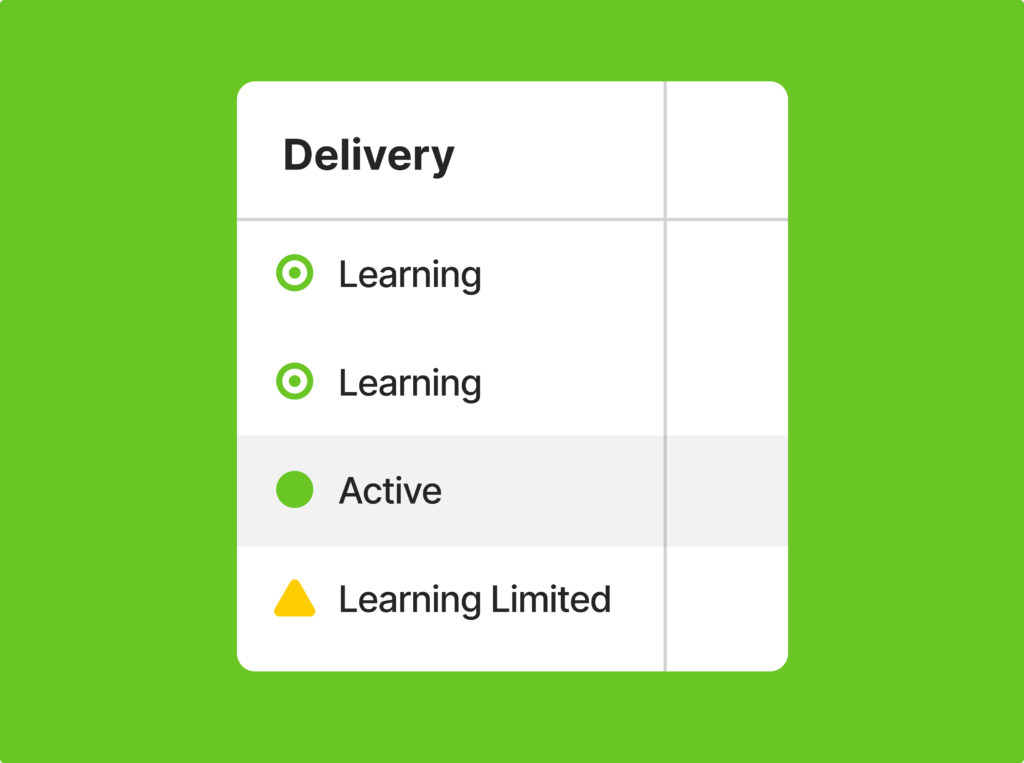
- The “Learning Limited” Trap: Meta’s algorithm needs data to learn who responds best to your ads. If your audience is too small, it can get stuck in a “learning limited” phase, unable to find enough optimization events to perform efficiently. I’d often see my campaigns not spending budget as a result.
- Missed Opportunities: I began to suspect I was excluding potential customers who might not have expressed those specific interests on Facebook, but would still love my product. Maybe someone who likes “home decor” would love my gardening product, even if they never explicitly searched for “organic gardening.”
This is when I started hearing whispers about broad targeting being the new hotness. My initial reaction? Skepticism.
My Leap of Faith: Embracing Broad Targeting
The idea of broad targeting felt counter-intuitive. It essentially means giving Meta’s algorithm a much wider pool of people to work with, often just defining age, gender (if relevant), and location, and letting the algorithm figure out the rest.
My Broad Targeting Experiments:
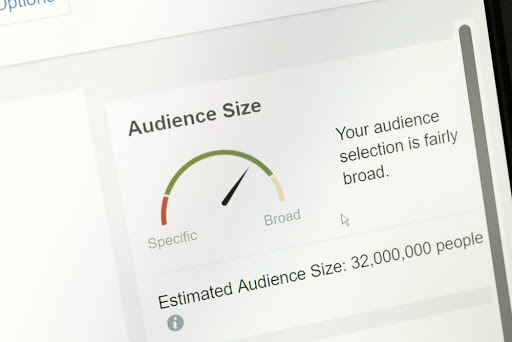
- Starting Wider: Instead of stacking interests, I’d simply target men and women aged 25-55 in my country. No interests, no behaviors, nothing else.
- Trusting the Algorithm: This was the hardest part. It required me to let go of some control and trust that Meta’s powerful AI knew more about finding my customers than I did with my educated guesses.
The Results? Often Surprising, and Often Better!
- Lower Costs, Wider Reach: My costs per result often decreased significantly. With a larger audience, Meta had more room to find the cheapest and most effective conversions. My ROAS (Return On Ad Spend) frequently improved.
- Escaping “Learning Limited”: With a much larger audience, the algorithm had ample data to learn and optimize, leading to consistent delivery and spending.
- Discovering Unexpected Customers: I started reaching people I would have never thought to include in my detailed interest targeting stacks, but who ended up being great customers. Meta’s algorithm could spot patterns in behavior and demographics that I simply couldn’t deduce.
- Creative is King: With broad targeting, the ad creative itself becomes even more critical. Since you’re showing it to a wider audience, your ad needs to immediately grab attention and speak to a common human desire or problem.
The “Updated Meta Ads Truth”: It’s Not Black and White
So, does this mean interest targeting is dead? Not necessarily. My Updated Meta Ads Truth is more nuanced:

- Broad is Often Better for Scaling: If you’re looking to scale a successful campaign and reach a large number of people efficiently, broad targeting is a powerful tool. It allows the algorithm maximum flexibility to find converters at the best price.
- Interest Targeting Still Has Its Place (Initially): For new businesses or products, or when I’m trying to test a specific concept, I might still start with a slightly more defined audience (e.g., 2-3 relevant interests) just to get some initial data and ensure my ads are relevant to someone. This helps Meta’s algorithm “warm up” faster.
- Creative Is paramount with Broad Targeting: When you’re showing your ad to a wide audience, your ad itself needs to do the heavy lifting. It needs to be universally appealing, clear, and engaging enough to make the right people self-identify.
- Audience Signals are Key: Even with broad targeting, Meta’s algorithm isn’t dumb. It still uses all the signals it gathers about your ideal customer (from your landing page, your website pixel data, people who convert, etc.) to refine who it shows your ad to. It’s just doing it more intelligently behind the scenes.
- Test, Test, Test: As always, the real truth is found in your own experiments. I always run A/B tests: one campaign with very specific interests, and another with broader targeting, to see which performs better for that specific product or offer.
If you want to about that which is best in meta and tiktok ads Read this: https://zavify.co.uk/blog/meta-ads-vs-tiktok-ads-which-best/
My Recommendation for You
If you’ve been clinging to your intricate interest targeting like I used to, I strongly encourage you to try a broad targeting campaign. Start with just age, gender (if relevant), and location. Ensure your ad creative is captivating and speaks to a broad desire. Give it enough budget to get out of the learning phase quickly.
You might be surprised by the results, just like I was. The Updated Meta Ads Truth for me is that by trusting the powerful algorithms Meta has developed, I’ve often found more success by casting a wider net and letting the AI do what it does best: find the people most likely to convert, efficiently and at scale. It’s a leap of faith, but one that has frequently paid off handsomely.