
While advertising is an important part of business promotion, marketing is a much broader concept that covers everything from understanding customers to delivering value. However, they are not the same thing.
Many people use the terms marketing and advertising interchangeably. Understanding the difference between marketing and advertising helps businesses make smarter decisions, spend budgets effectively, and create better customer relationships.
So let’s explore what each term really means and how they work together.
What Is Marketing?

Marketing is the complete process of identifying customer needs, creating products or services, promoting them, and building long-term relationships with customers.
In simple words, marketing is about delivering the right product to the right audience at the right time.
It involves research, planning, branding, communication, customer experience, and sales strategy. Therefore, marketing is not just about promotion — it includes every step that leads to customer satisfaction.
Key Components of Marketing:
- Market research and customer analysis
- Product development and pricing strategy
- Branding and positioning
- Distribution channels
- Customer relationship management
- Promotion and communication strategies
Marketing focuses on understanding customers deeply and creating value that keeps them coming back.
For 5 Marketing Stratergies, Read this: https://zavify.co.uk/blog/what-are-the-five-marketing-strategies-retailers-spend-half-of-their-annual-budget-on/
What Is Advertising?
Advertising, on the other hand, is a specific part of marketing. It focuses mainly on promoting products, services, or brands through paid communication channels.
In simple terms, advertising tells people about your product and encourages them to take action.
Examples of advertising include:
- Social media ads (Facebook, Instagram, TikTok)
- Google search ads
- Television and radio commercials
- Billboards and print ads
- Influencer paid promotions
Unlike marketing, advertising is more focused on visibility, awareness, and immediate response.
The Core Difference Between Marketing and Advertising
Although marketing and advertising work together, their roles are different.
Here’s the main distinction:
👉 Marketing = Overall strategy and customer relationship building
👉 Advertising = Promotional activity within that strategy
Marketing defines what message to communicate, while advertising delivers that message to the audience.
Quick Comparison: Marketing vs Advertising
Marketing:
- Long-term strategy
- Focuses on customer needs
- Includes product development, branding, pricing, and sales
- Builds relationships and loyalty
- Uses both paid and organic methods
Advertising:
- Short-term promotional activity
- Focuses mainly on awareness and sales
- Mostly paid communication
- Aims for quick results
- Targets specific audiences
Both are essential, but they serve different purposes.
Why Businesses Need Both Marketing and Advertising
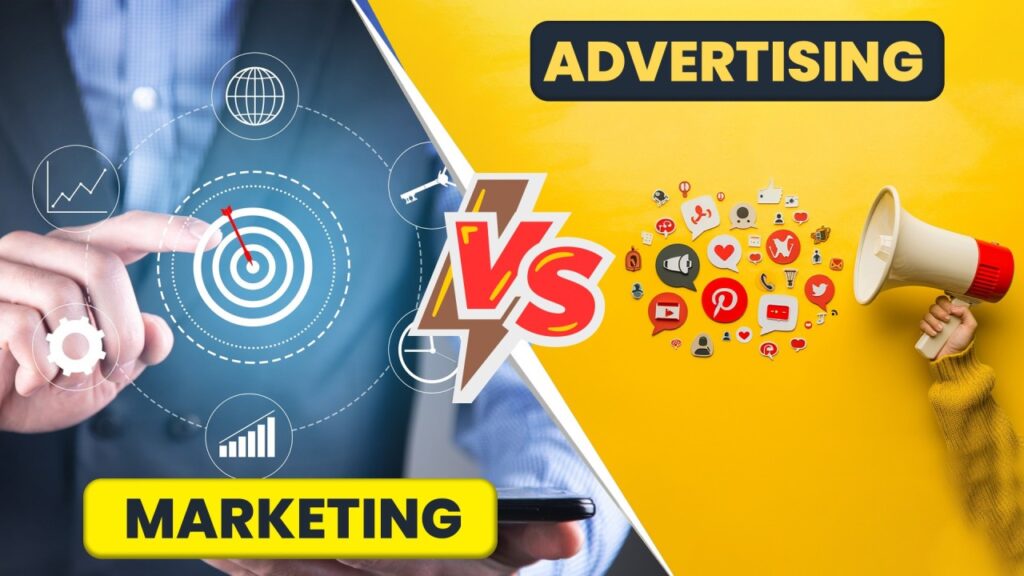
Some businesses rely only on advertising, thinking it will automatically generate sales. However, without proper marketing strategy, advertising often fails.
For example:
- Ads may attract traffic, but weak branding reduces trust.
- Promotions may generate clicks, but poor product positioning hurts conversions.
- Customers may buy once, but lack of relationship building reduces repeat purchases.
Therefore, marketing provides the foundation, while advertising amplifies the message.
Real-Life Example to Understand Better
Imagine launching a clothing brand.
Marketing Activities:
- Researching fashion trends
- Identifying target audience
- Designing products
- Setting price strategy
- Creating brand identity
Advertising Activities:
- Running Instagram ads
- Google Shopping campaigns
- Influencer collaborations
- Promotional discounts
Marketing decides what to sell and why. Advertising tells people about it.
How Digital Marketing Changed Advertising
With the rise of digital platforms, advertising has become more data-driven and targeted. Businesses can now:
- Track customer behavior
- Personalize ads
- Optimize campaigns in real time
- Measure ROI accurately
However, despite these advancements, the fundamental difference remains the same: advertising is still a component of marketing.
Common Mistakes Businesses Make
Understanding the difference helps avoid costly mistakes.

Frequent mistakes include:
- Spending heavily on ads without strategy
- Ignoring customer research
- Focusing only on sales, not relationships
- Neglecting branding
- Measuring only short-term results
Successful businesses balance both marketing strategy and advertising execution. As businesses grow into new markets, choosing to Register a company in Netherlands can support long term marketing and operational goals.
When Should You Focus More on Marketing?
You should prioritize marketing when:
- Launching a new brand
- Developing new products
- Entering new markets
- Building customer loyalty
- Creating long-term growth strategy
Marketing builds the foundation for sustainable success.
When Should You Focus More on Advertising?
Advertising becomes important when:
- Promoting offers or launches
- Increasing brand visibility
- Generating quick leads or sales
- Scaling an existing business
- Retargeting potential customers
Advertising accelerates growth when the marketing base is strong.
The Future of Marketing and Advertising
Modern businesses are integrating both strategies more closely than ever before.
Trends shaping the future include:
- AI-driven personalization
- Influencer and creator marketing
- Content marketing dominance
- Data-driven advertising decisions
- Omnichannel customer experiences
Companies that combine strategic marketing with smart advertising will stay ahead of competitors.
Final Thoughts
To summarize clearly:
Marketing is the big picture strategy.
Advertising is one tool within that strategy.
Marketing focuses on understanding customers, building brands, and creating long-term value. Advertising focuses on promoting products and encouraging immediate action.
Instead of choosing one over the other, businesses should integrate both effectively. When marketing and advertising work together, the result is stronger brand presence, better customer trust, and higher revenue.