
For multi-unit enterprises, franchises, and service-based businesses, digital visibility is a game of proximity. Ranking at a national level is a feat of authority, but winning at a local level—where the actual transaction occurs—requires a different tactical blueprint.
Learning how to manage SEO for multiple locations is the process of balancing brand-wide consistency with hyper-local relevance. When executed correctly, it allows a business to dominate the “Near Me” ecosystem across dozens or hundreds of specific geographic markets.
What Is Multi-Location SEO?
Multi-location SEO is the strategic optimization of a website and online presence to rank in search results across multiple distinct geographic areas.
Unlike traditional SEO, which focuses on broad topical authority, multi-location SEO prioritizes Local Intent. It involves managing a network of Google Business Profiles (GBP), localized landing pages, and regional citation data to ensure search engines connect your specific branch to a user’s specific location.
Related Concepts & Comparisons
To master this at scale, you must distinguish between the different layers of search visibility.
Local SEO vs. Organic SEO
Traditional Organic SEO focuses on “What” (e.g., how to fix a pipe). Multi-location SEO focuses on “Where” (e.g., plumber in Chicago). While organic authority helps your local pages rank, the local algorithm relies heavily on NAP data (Name, Address, Phone Number) and distance.
Single Location vs. Multi-Unit Strategy
A single-location business can focus all its energy on one Google Business Profile. A multi-location enterprise must deal with internal competition (ensuring two branches don’t cannibalize each other’s traffic) and data fragmentation (outdated info on third-party directories).
How Multi-Location SEO Works
Success in multi-location search is built on three pillars: Technical Infrastructure, Local Content, and Data Management.
1. The Local Landing Page Architecture
Each location requires a dedicated URL on your main domain. Tracking which of those pages earns the strongest inbound links is far easier when you use SEO backlink software to monitor authority signals across every location. This allows search engines to index specific geographic metadata for each branch.
- Best Practice:
example.com/locations/city-name/ - Avoid: Using one generic “Contact” page for all locations.
2. Google Business Profile (GBP) Management
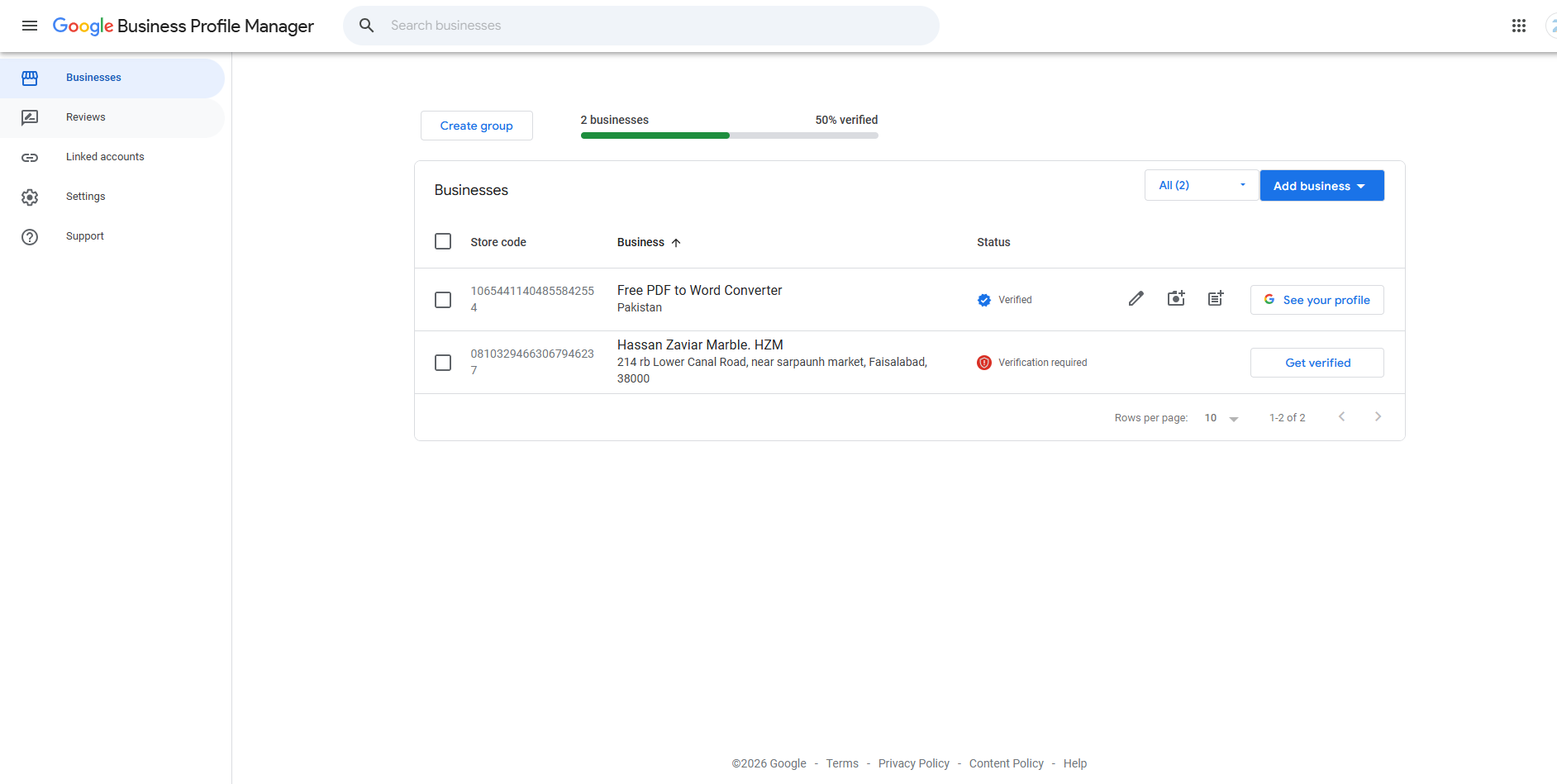
The GBP is the engine of the Local Map Pack. For businesses with 10+ locations, this should be managed via a Bulk Verification process. Each profile must be optimized with location-specific photos, service hours, and attributes (e.g., “Wheelchair accessible” or “Free Wi-Fi”).
3. Local Citation & NAP Consistency
Search engines verify your legitimacy by checking third-party directories (Yelp, Yellow Pages, industry-specific sites). If your address is “Suite 100” on your site but “Room 100” on Yelp, it creates a “data conflict” that can suppress your rankings.
Benefits and Trade-offs
Managing local SEO at scale is a resource-intensive endeavor that offers high rewards but carries significant operational overhead.
The Benefits
- Domination of “Near Me” Queries: Captures users at the bottom of the funnel when they are ready to visit or buy.
- Compound Authority: Each local page contributes to the overall domain authority of the brand.
- Regional Insights: Analytics can show which geographic markets are underserved, informing future physical expansion.
The Trade-offs
- Reputation Management at Scale: Monitoring and responding to reviews for 50 locations is a massive undertaking.
- Content Dilution: There is a risk of creating “cookie-cutter” pages that Google might view as thin content if they aren’t sufficiently localized.
Use Cases: Strategies by Business Type
The approach to managing SEO for multiple locations varies based on how you serve your customers.The approach to managing SEO for multiple locations can vary depending on how you serve customers, especially when leveraging seo reseller programs to streamline and scale local SEO strategies.Partnering with a digital pr company can help strengthen local search visibility by securing authoritative media coverage and high-quality backlinks for each location.
Service Area Businesses (SABs)
- Best for: Plumbers, cleaners, or landscapers who visit customers but don’t have a storefront.
- Key Feature: Define service radiuses in GBP and create “Service Area” pages rather than “Location” pages.
Brick-and-Mortar Retail/Franchises
- Best for: Coffee shops, gyms, or dental clinics.
- Key Consideration: Localized keywords are vital. Instead of just “Gym,” use “Strength Training in [Neighborhood Name].”
Large Scale Enterprises
- Best for: Banking institutions or national insurance providers.
- Key Consideration: Use Local Business Schema Markup (JSON-LD) to programmatically tell search engines about every branch’s unique data.
How to Evaluate Your Multi-Location Strategy
If you are currently managing several locations, use this framework to audit your performance:
- Duplicate Content Check: Are your local pages identical except for the city name? If so, add local testimonials, staff bios, or neighborhood-specific directions to differentiate them.
- Review Velocity: Are all locations receiving fresh reviews? A location with no reviews for six months will drop in the Map Pack.
- Mobile UX: Local searches are primarily mobile. Ensure your location pages load in under 2 seconds and have a click-to-call button.
The Strategic Verdict
Managing SEO for multiple locations is a shift from broadcasting to narrowcasting.
If your business relies on physical foot traffic or regional service delivery, a centralized organic SEO strategy is insufficient. You must decentralize your content and technical signals to meet the user exactly where they are standing.
For brands with 1–5 locations, manual management is feasible. For 10+ locations, investing in a Local Listing Management tool (like Yext, BrightLocal, or Semrush Local) is no longer optional—it is a prerequisite for maintaining data integrity and search visibility.
FAQ,s
Should I have a separate website for each location?
No. For the vast majority of businesses, it is better to host all locations on one primary domain using subdirectories (e.g., brand.com/locations/london). This allows every location to benefit from the overall “Domain Authority” of the brand. Maintaining multiple separate websites splits your backlink profile and increases your hosting and management costs significantly.
How do I handle duplicate content on local pages?
While the core services might be the same, you should localize at least 30% of the content on each page. Avoid simply “swapping city names.” Instead, include unique elements such as:
Local reviews and testimonials.
Bios of the local branch manager or team.
Specific driving directions and landmarks.
Photos of the actual storefront or local projects.
What is the best way to manage reviews for 20+ locations?
At scale, manual monitoring becomes a bottleneck. Use a reputation management platform to centralize all reviews into a single dashboard. Prioritize responding to negative reviews within 24 hours, as responsiveness is a known signal for the Google local algorithm. Encouraging “keyword-rich” reviews (e.g., “Best vegan pizza in Austin“) can also boost local rankings.
Do I need a physical office in every city I want to rank in?
To appear in the Google Map Pack (the map at the top of search results), you generally need a physical address or a designated service area where you meet customers. If you want to rank in a city where you don’t have an office, you can create a localized landing page to rank in the organic results below the map, but you will struggle to appear in the Map Pack itself.
How to Manage SEO for Multiple Locations?
Managing SEO for multiple locations involves creating unique, location-specific landing pages optimized with local keywords and accurate business details. Each location should have its own Google Business Profile, consistent NAP information across directories, and locally relevant content to improve visibility and rankings in each area.
The point about local landing page architecture being key to multi-location SEO really resonates. Too often, businesses focus on one-size-fits-all pages, which can dilute the local relevance. Great advice!
I love how you highlighted the role of proper local landing page structure in multi-location SEO. It’s such a common pitfall — companies go with universal pages that end up lacking any real local punch. Great insight and very practical advice!
Great insights on the balance between brand consistency and local relevance—especially how local landing pages and GBP management are crucial for scaling SEO across multiple locations. I’d love to hear more about the challenges teams face when trying to maintain NAP consistency across hundreds of locations, and how they prioritize which markets to focus on first.