What Is B2B SaaS?
Introduction: Understanding B2B SaaS
Technology has transformed how companies operate. Instead of installing complex software systems on local computers, businesses increasingly rely on cloud-based applications accessible from anywhere. This shift has led to the rise of B2B SaaS, or Business-to-Business Software as a Service.
Simply put, B2B SaaS refers to software companies providing digital tools to other businesses through online subscriptions. These tools help organizations manage operations, improve productivity, and enhance customer experiences without heavy upfront investment.
As remote work, automation, and digital transformation continue to expand, understanding B2B SaaS becomes essential for modern businesses.
What Exactly Is B2B SaaS?

B2B SaaS stands for Business-to-Business Software as a Service. It describes cloud-based software solutions sold by one company to another company, including organizations like a Software Development Company that rely on scalable digital tools rather than selling directly to individual consumers.
Businesses typically access these tools through web browsers or mobile apps, paying monthly or annual subscription fees instead of purchasing permanent licenses.
Common B2B SaaS categories include:
- Customer relationship management systems
- Marketing automation platforms
- Accounting and finance software
- Project management tools
- Collaboration and communication apps
These solutions help businesses streamline workflows, reduce costs, and improve efficiency.
How B2B SaaS Works
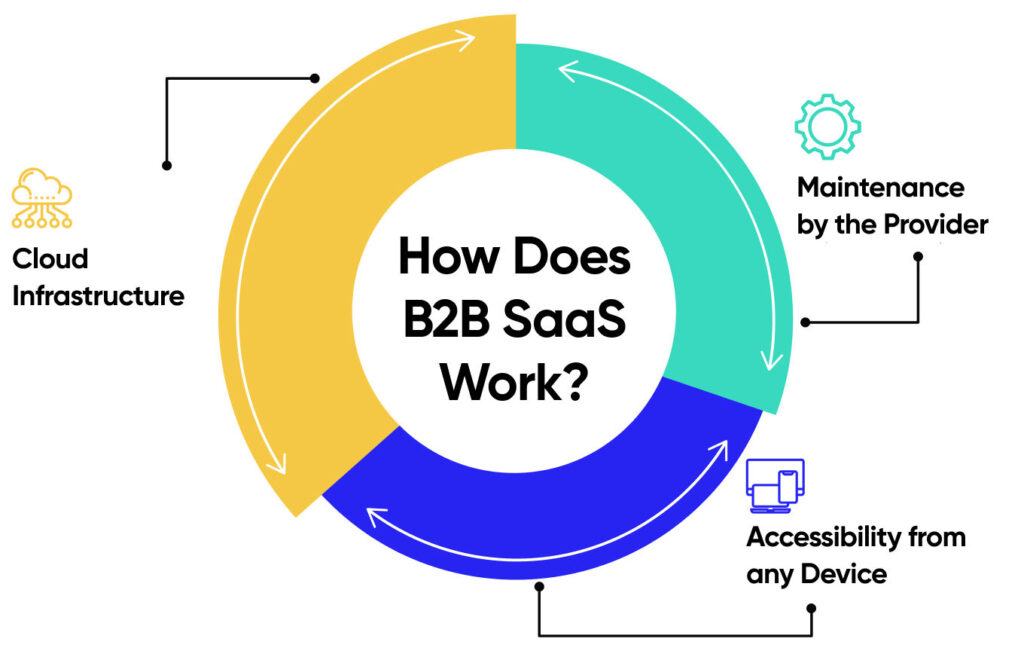
B2B SaaS operates on a cloud delivery model. Software providers host applications on remote servers, allowing customers to access them via the internet.
The process usually involves:
- Signing up for a subscription plan
- Accessing software through a secure login
- Receiving automatic updates and maintenance
- Scaling usage based on business needs
Because everything runs online, businesses avoid installation complications, hardware expenses, and manual updates.
This flexibility is one of the biggest reasons B2B SaaS continues growing worldwide.
Key Features of B2B SaaS Solutions
Although different platforms serve different purposes, most B2B SaaS products share certain characteristics.
Subscription-Based Pricing
Companies pay recurring fees rather than large one-time costs.
Cloud Accessibility
Users can access software from anywhere with internet connectivity.
Automatic Updates
Providers handle maintenance, security patches, and upgrades.
Scalability
Businesses can increase or decrease usage depending on requirements.
Data Security
Reliable providers implement strong security measures to protect business information. ISO 27001 implementation helps standardize these security practices, ensuring consistent data protection and strengthening overall trust and compliance.Understanding the data protection officer salary also reflects the importance of dedicated expertise in managing security risks.
These features make B2B SaaS attractive for organizations seeking efficiency.
Benefits of B2B SaaS for Businesses
Adopting B2B SaaS solutions offers several advantages that traditional software often cannot match.
Cost Efficiency
Subscription pricing reduces initial investment and maintenance expenses.
Faster Implementation
Cloud software usually requires minimal setup.
Increased Productivity
Automation tools save time and reduce manual effort.
Collaboration Support
Teams can work together easily, even remotely.
Continuous Innovation
Providers regularly introduce new features.
These benefits explain why many companies prioritize SaaS adoption.
Examples of B2B SaaS Applications
Understanding real-world examples helps clarify the concept.
Businesses commonly use B2B SaaS for:
- Managing customer relationships
- Running marketing campaigns
- Tracking finances and invoices
- Coordinating remote teams
- Analyzing business data
These tools support daily operations and strategic decision-making.
Difference Between B2B SaaS and B2C SaaS
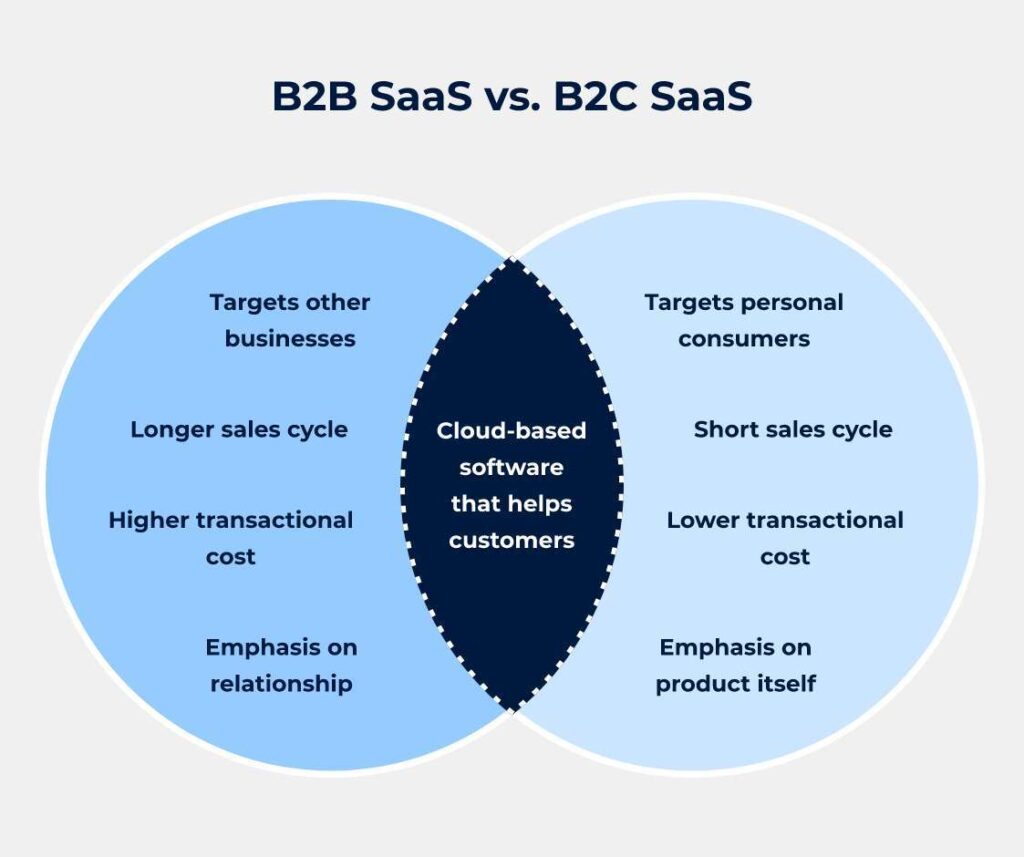
While both involve cloud-based software, the target audience differs.
B2B SaaS
- Sold to businesses
- Focus on productivity and efficiency
- Longer sales cycles
- Higher subscription value
B2C SaaS
- Sold directly to consumers
- Focus on convenience or entertainment
- Faster purchasing decisions
- Lower individual pricing
Understanding this difference helps businesses choose appropriate solutions.
Common Pricing Models in B2B SaaS
Pricing structures vary depending on product complexity and customer needs.
Tiered Pricing
Different plans offer varying features and limits.
Per-User Pricing
Costs depend on the number of users accessing the software.
Usage-Based Pricing
Charges depend on how much the service is used.
Enterprise Custom Pricing
Large organizations negotiate tailored contracts.
These models allow flexibility for businesses of all sizes.
Challenges in B2B SaaS Adoption
Despite many advantages, adopting SaaS solutions may involve challenges.
Data Privacy Concerns
Businesses must ensure providers meet security standards.
Integration Issues
Software should connect smoothly with existing systems.
Vendor Dependence
Relying heavily on one provider can create risks.
Learning Curve
Teams may need training to use new tools effectively.
Addressing these factors helps ensure successful adoption.
Future Trends in B2B SaaS
The B2B SaaS industry continues evolving rapidly. Several trends are shaping its future.
Artificial intelligence is enhancing automation and analytics. Remote collaboration tools are becoming more advanced. Customization options are increasing, allowing businesses to tailor software to specific needs.AI note takers are also becoming popular, helping teams automatically capture meeting notes and key insights without manual effort.
Additionally, cybersecurity improvements are gaining importance as data protection becomes critical.
These developments suggest sustained growth for B2B SaaS in the coming years.
Why B2B SaaS Matters Today
Businesses today operate in fast-changing environments. Flexibility, efficiency, and scalability are essential for staying competitive.
B2B SaaS provides these advantages by offering modern tools without the complexity of traditional software installations. It allows companies to focus on growth rather than technical maintenance.
Whether for marketing, finance, operations, or communication, SaaS solutions help organizations adapt quickly to new challenges.
Final Thoughts
B2B SaaS represents a powerful shift in how businesses access and use software. Instead of expensive installations and maintenance, companies now rely on cloud-based subscriptions that offer flexibility, scalability, and continuous innovation.
By adopting the right B2B SaaS tools, businesses can improve productivity, reduce costs, and enhance collaboration. As digital transformation accelerates globally, understanding this model is becoming increasingly important for entrepreneurs, marketers, and business leaders.
Investing in suitable SaaS solutions can provide a competitive advantage and support long-term business success.