

What Is Web3 Marketing? (Complete Beginner Guide)
The digital world is evolving rapidly, and marketing strategies are changing with it. One of the newest developments is Web3 marketing, a modern approach built around decentralization, blockchain technology, and community-driven engagement. Unlike traditional digital marketing, Web3 marketing focuses more on transparency, ownership, and direct interaction between brands and users.
If you’ve heard terms like blockchain, NFTs, crypto communities, or decentralized apps, you’re already touching the world of Web3. Understanding what Web3 marketing is can help businesses, marketers, and entrepreneurs stay ahead in this fast-changing digital landscape.
Understanding Web3 First
To fully grasp Web3 marketing, you need to understand what Web3 means. Web3 refers to the next generation of the internet built on decentralized technologies, especially blockchain networks like Ethereum.
Unlike Web2 (today’s internet dominated by large platforms), Web3 offers:
- Greater user data ownership
- Transparent transactions
- Decentralized platforms
- Community governance
- Digital asset ownership
This shift has fundamentally changed how brands interact with audiences.
What Is Web3 Marketing?
Web3 marketing is the promotion of products, services, or communities using decentralized technologies, blockchain tools, NFTs, cryptocurrencies, and community-driven platforms.
Instead of relying only on paid ads or centralized social media platforms, Web3 marketing emphasizes:
- Community building
- Authentic engagement
- Token-based incentives
- Transparency and trust
This makes marketing more interactive and less intrusive compared to traditional advertising.
Key Features of Web3 Marketing
1. Community-Centric Approach
Web3 projects often prioritize community over direct selling. Brands focus on building loyal communities through forums, Discord groups, and social platforms.
Strong communities create:
- Higher brand trust
- Organic promotion
- Long-term customer loyalty
2. Token and NFT Incentives
Many Web3 campaigns use tokens or NFTs as rewards. For example, NFT marketplaces like OpenSea allow brands to create digital collectibles that strengthen engagement.
These incentives can:
- Encourage participation
- Build exclusivity
- Increase brand visibility
3. Decentralized Advertising
Traditional ads rely heavily on big tech platforms. Web3 marketing explores decentralized advertising networks where users have more control over their data.
This improves:
- Privacy protection
- Transparency
- User trust
4. Transparency Through Blockchain
Blockchain records are publicly accessible, making marketing activities more transparent. Customers can verify transactions, rewards, and brand promises easily. In addition, operating under a vara license further strengthens this transparency by ensuring that marketing campaigns tied to digital assets comply with clear regulatory standards, reinforcing customer trust and accountability.
This transparency strengthens credibility.
Common Web3 Marketing Channels
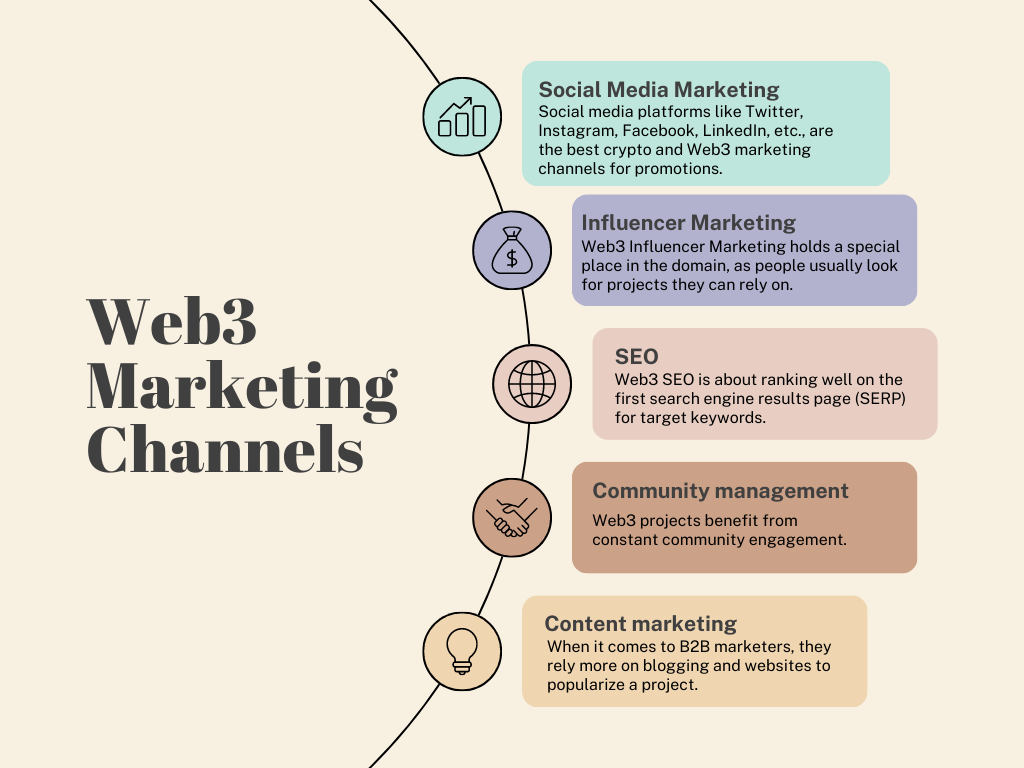
Web3 marketing uses a mix of traditional and decentralized platforms.
Popular channels include:
- Crypto communities and forums
- NFT marketplaces
- Blockchain-based social platforms
- Email marketing and content marketing
- Influencer collaborations in crypto niches
Combining multiple channels usually produces better results.
Benefits of Web3 Marketing
Businesses adopting Web3 marketing can gain several advantages.
Stronger Customer Trust
Transparency and ownership improve brand credibility.
Better Community Engagement
Users feel like participants, not just customers.
Innovative Brand Positioning
Early adoption positions brands as forward-thinking.
New Revenue Opportunities
NFTs, tokens, and digital assets open new monetization paths.
Challenges of Web3 Marketing
Despite its benefits, Web3 marketing has some hurdles.
Technical Complexity
Blockchain concepts can be difficult for beginners.
Regulatory Uncertainty
Crypto and blockchain regulations vary globally.
Market Volatility
Cryptocurrency markets can fluctuate quickly.
Education Gap
Many audiences still lack Web3 awareness.
Brands must educate customers while marketing.
How Businesses Can Start Web3 Marketing
If you want to explore Web3 marketing, start gradually.
Practical steps include:
- Learning blockchain fundamentals
- Joining crypto and Web3 communities
- Experimenting with NFTs or token rewards
- Creating educational content
- Collaborating with Web3 influencers
Gradual adoption reduces risk and builds expertise.
Future of Web3 Marketing
Web3 marketing is still developing, but its potential is significant. As blockchain adoption increases, more businesses will likely integrate decentralized strategies into their marketing mix.
Future trends may include:
- Greater virtual brand experiences
- Advanced digital ownership models
- Decentralized social networks
- Personalized blockchain-based advertising
Staying informed now can give businesses a competitive advantage later.
Final Thoughts
Web3 marketing represents a shift from traditional advertising toward transparency, community engagement, and decentralized digital ownership. It’s not just a trend — it’s part of the evolving internet ecosystem.
For marketers, entrepreneurs, and brands willing to adapt, Web3 offers exciting opportunities to connect with audiences in more authentic and innovative ways. While challenges exist, understanding and experimenting with Web3 marketing today can prepare you for the future of digital business.



I like how you highlighted the shift from audience targeting to true community building — that feels like the biggest mindset change with Web3 marketing. The emphasis on transparency and ownership through blockchain really reframes trust as a built-in feature rather than just a brand promise. It’ll be interesting to see how businesses balance the opportunities you mentioned with the education gap and regulatory uncertainty as adoption grows.
Great breakdown of Web3 marketing—really appreciate how the post highlights the shift from traditional advertising to more transparent, community-driven strategies. The emphasis on token incentives and decentralized engagement resonates with me, especially as brands look for ways to build trust in a more open and user-controlled digital environment.
This is a great breakdown of the shift toward community-centric tactics. I completely agree that the move from traditional brand-to-consumer interactions to true user ownership is the most critical hurdle for marketers to navigate right now.
Great breakdown of Web3 marketing—especially liked how it highlights the shift toward community-centric engagement and transparency through blockchain. As someone diving into this space, it’s helpful to see the practical benefits like stronger trust and new revenue models outlined. It’s clear that Web3 isn’t just a buzzword, but a fundamental reimagining of how brands can connect with their audiences.