
Building a Shopify store is easy. But how to Improve SEO on Shopify topic is a sensitive topic? Getting traffic from Google? That’s where most store owners struggle.
Many Shopify stores rely heavily on paid ads and completely ignore SEO. However, SEO is one of the most powerful long-term growth strategies for ecommerce. When done correctly, it brings free, high-quality traffic that converts consistently.
So, let’s break down how you can improve SEO on Shopify step by step—without confusion.
What Is Shopify SEO?
Shopify SEO is the process of optimizing your store so it ranks higher on search engines like Google.
This includes:
- Optimizing product pages
- Improving site structure
- Using the right keywords
- Enhancing page speed and user experience
The better your SEO, the more visible your store becomes to people actively searching for your products.
1. Do Proper Keyword Research First
SEO always starts with keywords.
If you target the wrong keywords, even the best-looking store won’t rank. Therefore, understanding what your customers are searching for is essential.
Focus on:
- Product-specific keywords
- Buyer-intent keywords
- Long-tail keywords with lower competition
Examples:
- “Kids cotton t-shirts online”
- “Buy baby clothes in Pakistan”
- “Organic children clothing store”
Once you identify the right keywords, everything else becomes easier.
2. Optimize Product Titles and Descriptions
Your product pages are the heart of your Shopify SEO.
Google ranks pages that clearly explain what the product is and who it’s for. So instead of writing vague titles and descriptions, focus on clarity and relevance.
Best practices:
- Include the main keyword in the product title
- Write unique product descriptions (never copy from suppliers)
- Explain benefits, not just features
- Use short paragraphs for readability
Additionally, avoid keyword stuffing. Write naturally for humans first, search engines second.
3. Improve Shopify Meta Titles and Descriptions
Meta titles and descriptions directly affect click-through rates from Google.
Even if you rank, people won’t click if your listing looks boring.
A strong meta title:
- Includes the main keyword
- Stays under 60 characters
- Clearly describes the page
A good meta description:
- Is under 160 characters
- Highlights benefits or offers
- Encourages clicks
Although meta descriptions don’t directly affect rankings, they strongly influence traffic.
4. Optimize Your Shopify Store Structure
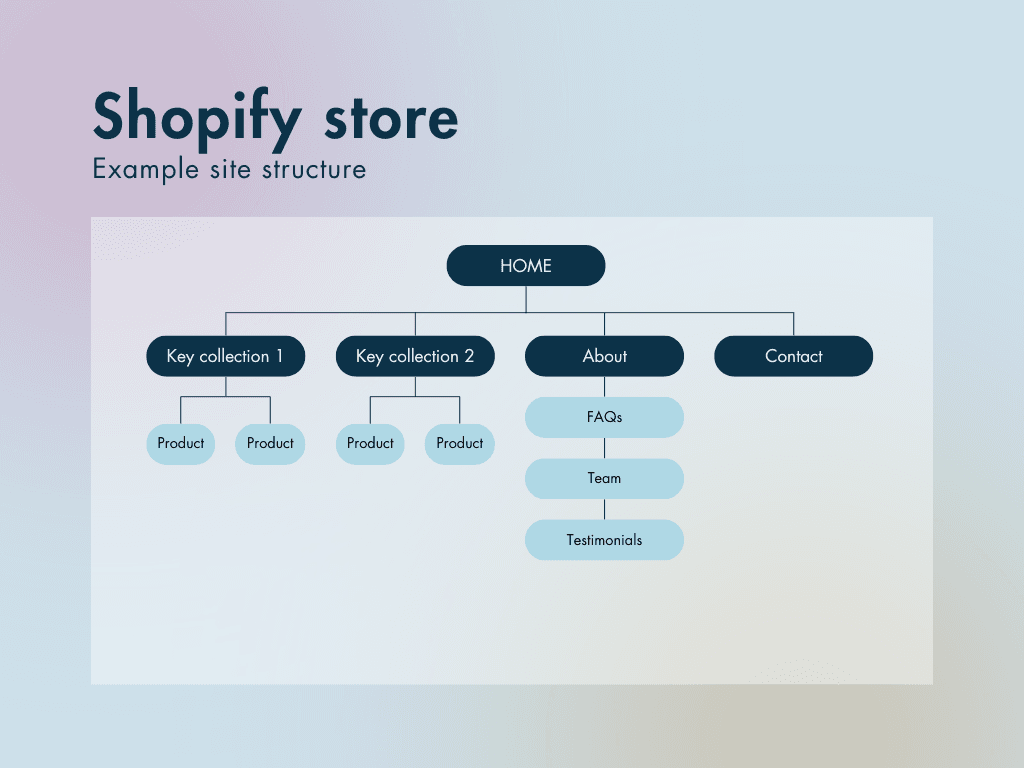
A clean site structure helps both users and search engines.
When Google can easily understand your website, it ranks your pages faster and more accurately.
Follow this structure:
- Home
- Collections
- Product pages
Avoid:
- Too many nested categories
- Broken internal links
- Orphan pages
Also, use internal linking to connect related products and collections. This improves SEO and keeps users engaged longer.
5. Speed Up Your Shopify Store
Page speed is a confirmed Google ranking factor.
If your store loads slowly, visitors leave—and Google notices that behavior.
To improve speed:
- Compress large images
- Remove unused Shopify apps
- Use a lightweight theme
- Avoid excessive animations
Faster websites not only rank better but also convert better. Beyond these quick wins, working with shopify store setup experts can help audit your theme and app stack to keep the store lean without sacrificing functionality.
6. Optimize Images for SEO
Images can drive traffic through Google Image Search if optimized correctly.
However, many store owners upload images without SEO considerations.
Always:
- Rename image files with keywords (e.g., kids-cotton-shirt.jpg)
- Add descriptive alt text
- Compress images without losing quality
This helps Google understand your images and improves overall page SEO.
7. Create SEO-Friendly Collection Pages
Collection pages often rank better than product pages because they target broader keywords.
Instead of leaving them empty, optimize them properly.
Best practices:
- Add keyword-rich collection titles
- Write a short SEO description at the top or bottom
- Internally link featured products
Well-optimized collections attract high-intent buyers.
8. Start a Blog on Shopify
Content marketing is one of the most powerful SEO tools.
A blog allows you to target informational keywords and build authority over time.
Examples of blog topics:
- “How to choose kids clothing sizes”
- “Best fabric for children’s clothes”
- “How to wash baby clothes safely”
Over time, blogs bring organic traffic that converts into sales.
9. Optimize URLs and Avoid Duplicates
Shopify automatically generates URLs, but you should keep them clean and readable.
Good URL example:
- /collections/kids-clothing
Avoid:
- Long, confusing URLs
- Duplicate product pages
- Multiple URLs for the same product
Duplicate content confuses search engines and hurts rankings.
10. Build Backlinks to Your Shopify Store
Backlinks are still one of Google’s strongest ranking signals.
The more high-quality websites linking to your store, the more trustworthy your site appears.
Ways to build backlinks:
- Guest blogging
- Influencer collaborations
- Product reviews
- Business directories
However, building links is only half the job. You should also invest inbacklink monitoring to track which websites are linking to you, identify lost links, and ensure you’re not receiving spammy backlinks that could hurt your rankings.Focus on quality, not quantity. One good backlink is better than ten spammy ones.
11. Improve User Experience (UX)

Google favors websites that users love.
If visitors stay longer, browse more pages, and don’t bounce quickly, your rankings improve naturally.
Improve UX by:
- Making navigation simple
- Using readable fonts
- Showing trust badges
- Having clear calls to action
SEO and user experience always go hand in hand.
Final Thoughts
Improving SEO on Shopify is not a one-day task.
It’s a long-term strategy that requires:
- Consistency
- Quality content
- Technical optimization
- Regular updates
Instead of chasing quick hacks, focus on building a strong, helpful, and trustworthy store. Over time, Google will reward your efforts with higher rankings and free traffic.
Good post! We are linking to this great content on our website.
Keep up the great writing.